
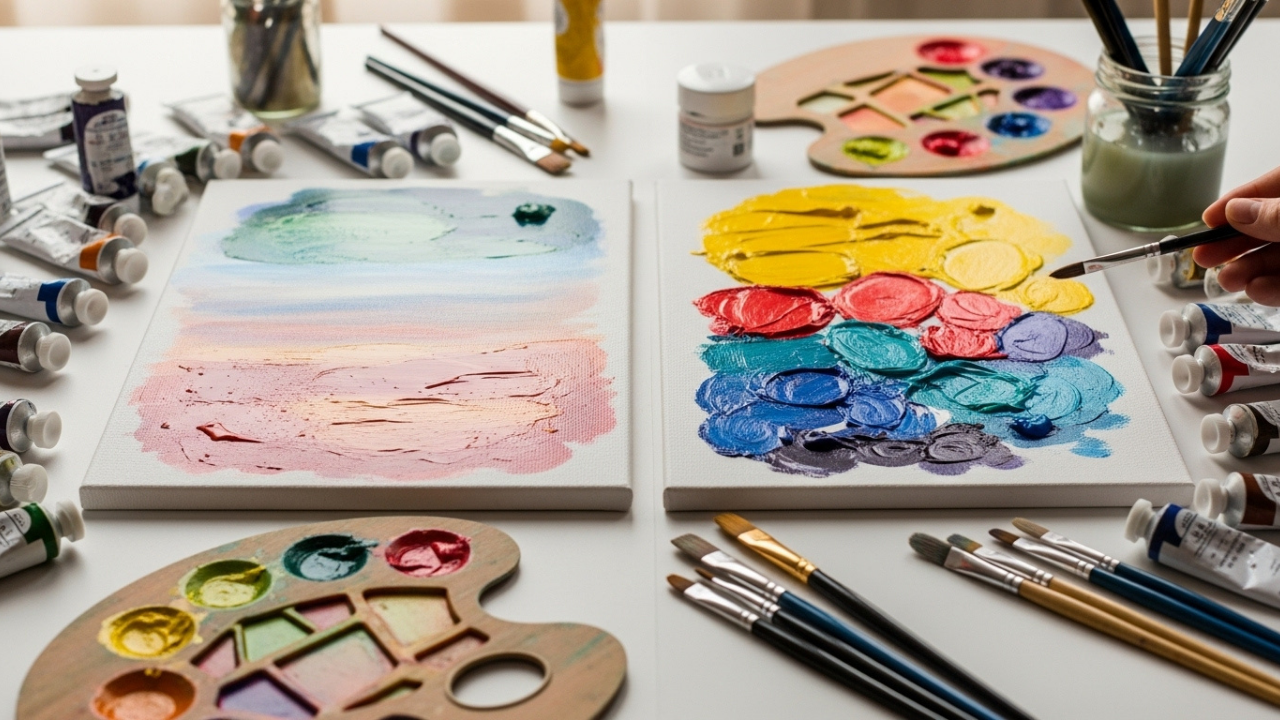
Hello, my fellow art enthusiast! If you’ve stepped into a paint store or observed an artist at work, surely you would have noticed the several types of paints. Oil paints and acrylic paints are among the most popular sorts. Even though they can both create great artwork, their paint behaves quite differently on paper or canvas. Choosing the right one can impact your painting experience and results significantly.
If you’re a beginner or just looking for a new medium, understanding the distinction between oil and acrylic paint will help you choose confidently. This guide will take you through the features, methods, and materials for both, helping you figure out which one better suits your essence and goals.
Key Takeaways
-
Understand the composition of oil and acrylic paints.
-
Learn how drying time affects painting techniques.
-
Discover textures, finishes, and layering differences.
-
Recognize the tools and materials suited for each medium.
-
Get tips for newbies who are trying out painting.
Understanding Oil Paint
Oil paint has been a favorite among artists for centuries. Its beautiful colors and soft textures make it ideal for producing realistic artwork.
Composition of Oil Paint
Oil paints are blends of pigment and a binder made of drying oil such as linseed oil, walnut oil, or poppy oil. When paint contains these oils, it has a buttery smoothness that is easy to apply. Oil paint dries slowly, which enables the artist to work the paint directly on the surface and blend colors.
Beginners must realize that the versatility of oil paint lies in its oil content. You can glaze, layer, and build texture with it without having the paint crack or fade away.
Drying Time and Workability
Oil paints dry slowly, while acrylic paints dry relatively quickly. Oil paints usually take a few days to become touch-dry and a few weeks to fully cure.
The benefit is that you have more time to mix colors, fix mistakes, and experiment with layering. Initially, waiting for layers to dry can feel slow, but once mastered, the slow-drying property allows for realistic depth and refined blending.
Texture and Finish
Oil paint is thick, buttery paint that works well for 3D effects called impasto. Impasto is the technique of applying paint so thickly that it stands out from the canvas, giving a dimensional quality to the work.
The natural glossiness of oil paint enhances color and gives paintings a luminous quality. Because oil colors remain wet longer, it is easier to glaze, scumble, and blend.
Tools and Materials for Oil Painting
Oil painting requires some specialized tools:
-
Soft bristle brushes for blending.
-
Stiffer brushes or palette knives for texture and details.
-
Linseed oil or turpentine to adjust paint consistency and clean brushes.
Because solvents are needed for cleanup, it’s best to work in a well-ventilated area. Beginners should start with a small set of high-quality paints and a basic assortment of brushes.
Understanding Acrylic Paint
Acrylic paint is a more modern medium that is popular because it is versatile, dries quickly, and is beginner-friendly.
Composition of Acrylic Paint
Acrylic paints are made of acrylic polymer emulsion and pigments. When wet, they dissolve easily, but when dry, they become waterproof.
By applying acrylics in thin layers, the artist can create a wash effect. Applying thicker layers allows texture. Acrylic’s flexibility opens many avenues for experimentation. Unlike oil paint, acrylics do not use oils to hold pigment, making them easier to handle.
Drying Time and Flexibility
Acrylic air dries quickly, from minutes to an hour depending on thickness. Quick drying allows rapid layering and experimentation, but blending can be tricky.
Artists can use retarders or water to slow drying time, facilitating smoother transitions. Acrylics are ideal for fast sketches and multi-layered paintings.
Texture and Finish
Thick acrylic paint can imitate oil textures, though generally thinner. By varying water or mediums, you can achieve a range of effects.
Varnish can enhance sheen and longevity. Acrylics are excellent for mixed-media and experimental work requiring layering and texture.
Tools and Materials for Acrylic Painting
Acrylics are more forgiving regarding tools and cleanup:
-
Synthetic brushes work well.
-
Water and soap are sufficient for cleaning.
-
Suitable for paper, canvas, wood, and fabric.
Beginners can start with primary colors, a small palette, and brushes of varying sizes, gradually experimenting with mediums and gels.
Key Differences Between Oil and Acrylic Paint
Understanding these differences will help you choose the right medium for your needs.
| Feature | Oil Paint | Acrylic Paint |
|---|---|---|
| Drying Time | Slow, ideal for blending and layering | Fast, good for layering and experimentation |
| Texture & Consistency | Thick, buttery, great for impasto | Flexible: thin washes or thick textures |
| Color Intensity & Finish | Luxurious, high gloss | Bright, vibrant, often matte or satin |
| Blending & Layering | Easy due to slow drying | Quick drying; requires layering or mediums for smooth transitions |
| Durability & Longevity | Lasts centuries if varnished | Long-lasting, minor color change over decades |
| Ease of Use | Requires patience, solvents, medium knowledge | Beginner-friendly, forgiving, easy cleanup |
Practical Exercises for Beginners
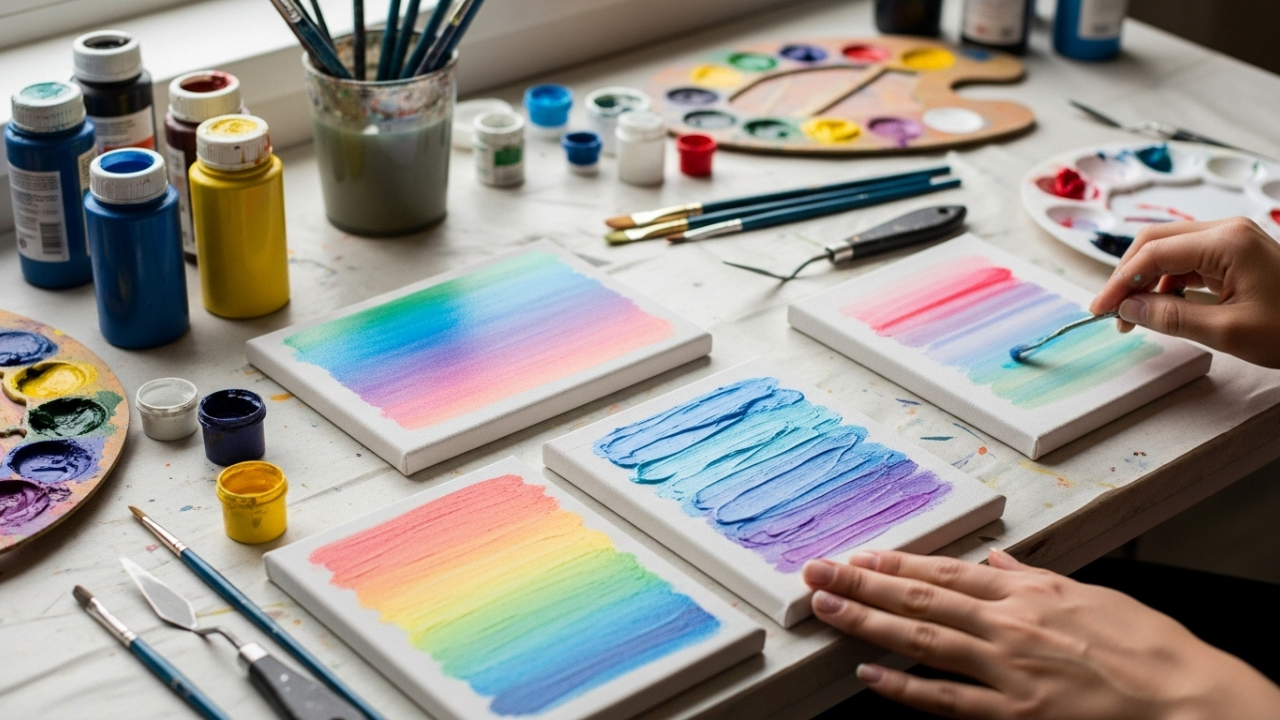
Working with the medium is the best way to learn. It’s important to start small and simple to build confidence and technique.
Blending and Layering Practice
Oil Paint: To create a gradient, apply two colors and mix them directly on the canvas. The slow drying time allows adjustments while blending, letting you refine transitions with ease.
Acrylic Paint: Try the same gradient technique but work quickly. Using a brush slightly wet with water or adding a retarder medium can slow drying for smoother blending.
Layering Exercises: Start with a light wash or base layer, then gradually add darker layers. This teaches patience and control while highlighting the differences between oil and acrylic layering.
Experimenting with Textures and Techniques
Oil Paint Techniques: Experiment with impasto using a palette knife for raised, dimensional effects. Practice glazing and subtle color transitions to see how oils build depth.
Acrylic Techniques: Try washes, sponges, or dry brushing. Use acrylic mediums to thicken paint or create transparency. These exercises show how acrylics behave flexibly, while oils remain soft and buttery.
Small Study Paintings
Begin with simple studies of fruit, leaves, or skies. Focus on one technique at a time—blending, glazing, or layering. Observe how oils allow long blending for smooth gradients, whereas acrylics provide fast layers and bright, immediate results. These small studies prepare you for larger, more complex compositions.
Workspace Setup and Safety
Your workspace can influence your painting experience with each medium.
Oil Paint Considerations:
-
Use well-ventilated areas to avoid fumes from turpentine or mineral spirits.
-
Clean brushes in glass or metal containers.
-
Cover surfaces with newspaper or plastic to prevent stains.
Acrylic Paint Considerations:
-
Acrylics are safer indoors and clean easily with soap and water.
-
Keep a spray bottle of water handy to prevent paints from drying too fast on the palette.
Choosing the Right Medium for Your Goals
Project Type and Style:
-
Oils are ideal for detailed portraits, landscapes, or work requiring smooth blending.
-
Acrylics are perfect for quick abstracts, bright compositions, and experimental paintings.
Time and Commitment:
-
Oil painting requires patience and long drying times.
-
Acrylics dry fast, making them suitable for short sessions and exercises.
Budget and Materials:
-
Oil paints are more expensive and require brushes, mediums, and solvents.
-
Acrylics are generally cheaper, accessible, and beginner-friendly.
Common Challenges and Solutions
Oil Paint Challenges:
-
Patience is required for drying layers—use the waiting time to plan or test ideas.
-
Use solvents safely in ventilated spaces and follow disposal instructions.
-
Over-blending can muddy colors—step back and observe before continuing.
Acrylic Paint Challenges:
-
To extend blending time, add water, retarders, or work in smaller sections.
-
Keep areas slightly wet before applying new paint.
-
Acrylics dry darker than when wet—plan colors accordingly.
Combining Techniques
Adventurous beginners can combine both mediums:
-
Acrylic Underpainting with Oil Glazes: Fast-drying acrylics provide a base layer, while oils allow blending and depth.
-
Textures with Acrylics + Oil Details: Use sponges or palette knives for texture, then refine details with oils.
Experimenting helps you learn the strengths and limitations of each medium while developing your own style.
Advanced Beginner Tips
-
Maintain a color journal to observe mixing and drying effects for each medium.
-
Start with smaller canvases to reduce frustration.
-
Focus on one medium at a time until confident.
-
Use real-life references to study light and shadow.
-
Consistent practice is key; repetition improves skill and confidence.
How to package handmade gifts for shipping safely
How to package handmade gifts for shipping safely, Imagine spending hours crafting a delicate handmade gift. You wrap it up, ship it out, and wait
Best Craft Fairs to Sell Handmade Items in the US
Best Craft Fairs to Sell Handmade Items in the US, It would be striking to spend hours making handmade items, only to have no one

SEO Tips for Etsy Listings for Craft Sellers
SEO Tips for Etsy Listings for Craft Sellers, Picture the scene: spending hours creating gorgeous handmade items but not selling ANY on Etsy. Your products

Trending Handmade Products to Sell in 2025
Trending Handmade Products to Sell in 2025, If you spent hours making unique handmade items for sale in 2025, would you struggle to decide which
