
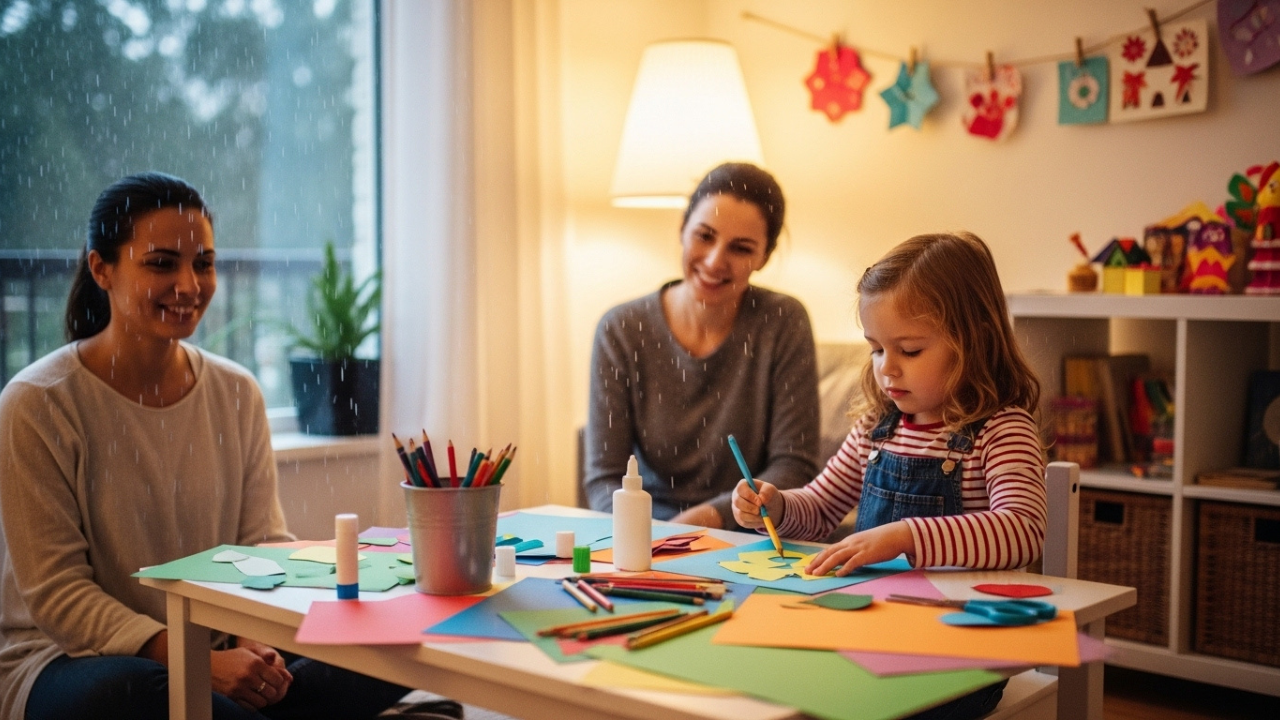
Rainy Day Craft Activities for 5-Year-Olds. I know what it’s like, friend – you want your little one to be engaged, happy, and learning, but the rain is keeping you from playing outside. That’s where indoor crafts come in. Creating a craft is not just wasting time. It brings creativity, makes you focused, and even gives you some quiet time to relax. Today I want to show you fun craft activities that your child would love and at the same time will not make a mess of your house.
Key Takeaways
- Crafts envisage children to enhance creativity, concentration, and fine motor skills.
- Craft activities indoors help reduce boredom and make the most of rainy days.
- Most activities use simple household materials and recyclables.
- Adults being involved helps you learn and connect better.
- You can adjust craft time to match your child’s energy and interests.
Why Crafts Matter for Your 5-Year-Old
At the age of five, kids should have a curious mind and eagerness to create. Doing crafts builds hand-eye coordination and fine motor skills. It also allows children to learn about shapes, colours, size, and patterns in a fun way. But the benefits go beyond the physical. Crafts teach patience, focus, and problem-solving. When your child is working on a project, be it something as simple as coloring a fish, they are learning to plan, follow steps, and see results.
I remember one rainy afternoon with my niece, Mia. She wanted to create a “magical forest” with paper, leaves, and glue. At first, she had a hard time cutting the leaves to fit her tiny paper trees. By the end, she was proud of every little piece she arranged. That sense of accomplishment is priceless. Crafts are a hands-on way for children to bring their ideas and feelings to life.
Preparing for a Rainy Day Craft Session
Before diving into the fun, preparation matters. You want the experience to be smooth for both of you. Begin your paper mache project by gathering extra supplies: paper, glue, scissors, and paints. You can create endless possibilities with household recyclables, such as cardboard, bottle caps, or old magazines.
Set up a designated craft space. It doesn’t have to be a big area. A small table with a mat or some newspapers will work well. Keep the materials in reach. However, make sure to supervise sharp objects and small items. Children do better in situations where they can access what they need while still feeling safe and guided.
A little preparation goes a long way. Before my niece begins any project, I always lay out things first. By preparing ahead of time, we can have a seamless sequence of activity without stopping to find glue sticks or mislaid markers.
Paper Crafts: Simplicity Meets Creativity
Paper crafts are a classic choice for rainy days. They are easy, safe, and endlessly adaptable. Creating animals using paper plates is one activity that is bound to win over your kids. Take a few paper plates, some colored paper, and markers. Craft lions, owls, fish, or even your own creations. Your child can cut out shapes to stick on for ears, fins, or wings and glue them to the plates.
Handprint art is another favorite. Your child paints their entire hand and places it on the paper to create trees, flowers, animals, and more with washable paint. These crafts may seem easy, but they are very powerful exercises for developing fine motor skills, shape and colour recognition.
The magic of paper crafts lies in their flexibility. You can change it daily—jungle animals one day, rockets into space the next. With every craft, a new story is told, enabling your child to discover their imagination while building confidence in their abilities.
Turning Rubbish into Precious Gems
Have your kids make art on a rainy day with materials lying around the house. A cardboard box can become a toy house, toy car, or even a castle. Your child can decorate these boxes using crayons, markers, or cut-out shapes. This project combines creativity, problem-solving, role-play, and working.
You can create a mosaic or collage from bottle caps, tin foil, and old magazines. The focus here is experimentation. There is no wrong way to arrange the pieces. I saw a 5-year-old make a “galaxy collage” with blue, purple, and silver paper scraps, and the pride in her eyes was unforgettable.
These activities also teach children resourcefulness. Creativity does not have to be costly, they learn. Imagination becomes the main ingredient.
Craft Ideas Made from Natural Elements
Even if the wet weather stops outdoor play, you can bring nature in with crafts. Leaf collages are a wonderful option. Collect fallen leaves from previous walks or parks nearby. Children can use the leaves to create arrangements of animals or trees. They can also create abstract patterns. It allows kids to appreciate Mother Nature and be more observant.
Rock painting is another enjoyable activity. You can paint small stones like animals, faces, or even little monsters. Children collect a rock from outdoors, bring it home, and paint it creatively. When you display the finished rocks around the home, it provides a sense of satisfaction.
Indoor crafts that include nature also inspire conversation. Get your child to ask questions about the colors, shapes, or patterns of leaves, rocks, etc. This helps children develop observation skills and reinforces language growth while keeping the activity fun.
Crafting with Senses: For Hands and Mind
Sensory crafts are any crafts that you can touch, feel, and sometimes smell. Salt dough is a classic option. You can create a dough by mixing salt, flour, and water, and creating moulds with it. Later you can dry and paint them. Kids enjoy squishing and shaping the dough, which helps their creativity and motor skills at the same time.
Another popular sensory craft is shaving cream painting. Put some shaving foam in a tray and allow your child to mix with color. Swirl the colors with fingers to create unique patterns. This activity is messy and hands-on, which will keep the kids engaged for a long time. It’s great for color mixing and textures.
Making crafts with their hands helps children become more focused. This develops their creative side and releases energy. They are great for rainy days, as they mix creativity, movement, and engagement.
Crafting Guides: Step-by-Step Ideas
Guidance transforms crafting from chaos to calm. Children often feel safe when they are made aware of what happens next. This encourages their imagination. Here are a few detailed craft ideas to try today:
Magic Forest Collage: Create leaf shapes from different tones of green colored paper for a magic forest collage. Glue them on a bigger sheet to form the trees and bushes. Urge your child to incorporate animals or imaginary creatures using crayons or markers. Discuss with them their choices: why they placed a bird here, or a squirrel there. This encourages storytelling and observation.
Bottle Cap Creatures: Gather bottle caps of many sizes and colors. Give them to your child to paint, then add small craft eyes or paper shapes to create bugs, fish, or monsters. This project promotes attention to detail and hand-eye coordination. Keep an eye on little objects and direct where they go.
Box Toys: Make a castle, rocket, or small car out of a medium-sized box. Let your child decorate it with markers, stickers, or other paper cut-outs. When finished, the box becomes a toy for pretend-play. The project involves hours of making and role-playing, making the day exciting despite the rain.
Engaging Your Child During Craft Time
It is a common issue to engage a 5-year-old without interrupting every minute. The key is to let the child lead while gently guiding. Learn to encourage: stop pressuring for perfection and start asking questions like, “What colors do you want to use for this area? How can we decorate the tree to make it look magical?”
Making cleanup part of the activity can also help. For instance, speed up the process of tidying by timing how quickly each item can be put away. This enhances responsibility and adds enjoyment to the day.
Finally, rotate activities to maintain interest. If your child finishes a collage quickly, move onto a sensory activity like playing with salt dough or painting with shaving cream. Doing different crafts raises energy levels and prevents boredom while developing different skills.
Safety Tips for Indoor Crafting
Safety is crucial, especially for children at this age. Always supervise scissors, small items, and any messy supplies. It is necessary to use only non-toxic paints and glue, and to wash hands after every craft.
Make sure to set up a clean workspace covered in newspaper or a craft mat. Show your child how to handle materials properly, while also letting them experiment with colours, shapes, and textures. Taking risks in craft work under supervision, such as cutting shapes or mixing paints, can help build confidence and independence.
Creative Challenges to Boost Problem-Solving
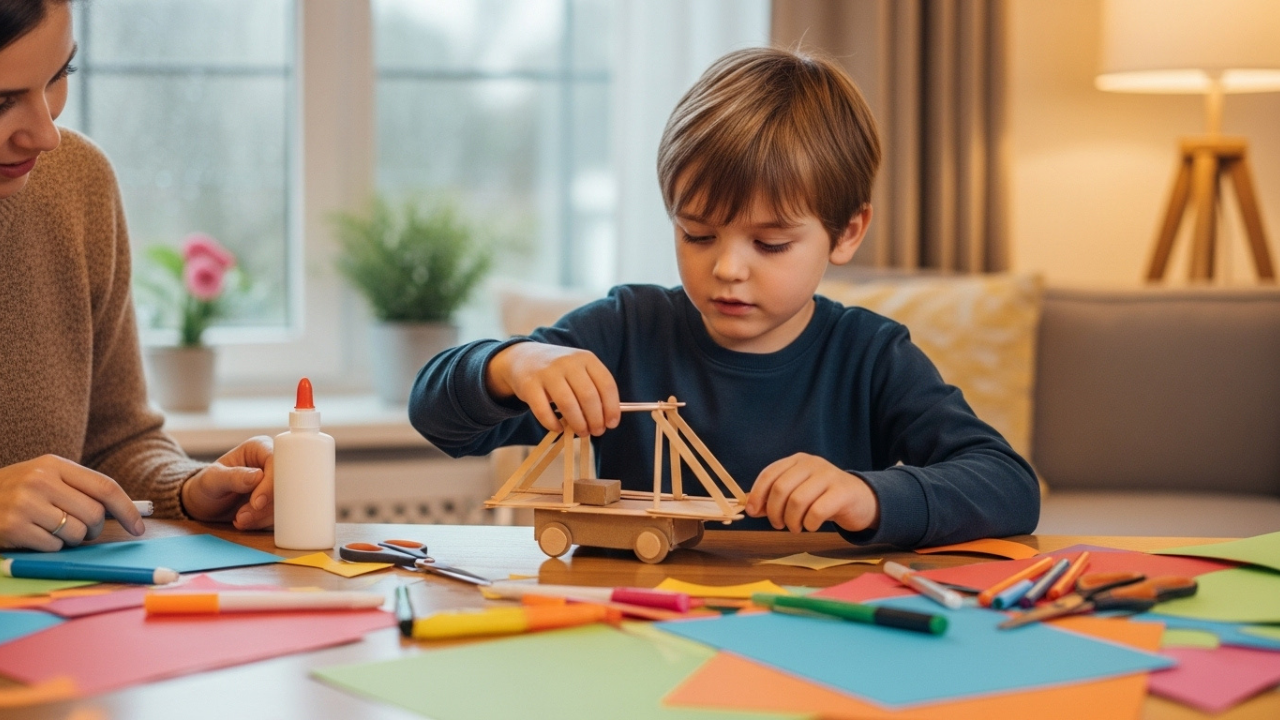
When engaging in craft activities, your kid will get chances to solve various problems. Try simple, fun challenges such as making a bridge with popsicle sticks or a puppet that can move. Careful planning, testing, and adapting those plans is a life skill that is essential for early childhood development.
My niece tried to make a “moving car” from cardboard one rainy afternoon. It didn’t roll the way she wanted, but I suggested that she think about why and try a new way. Watching her brainstorm solutions, test ideas out, and celebrate the small wins was something else. When you make things, you are not just being artistic. Crafting is a low-pressure lab where you can learn.
Long-Term Benefits of Craft Activities
Craft projects are not just something to do during the rain, but they also help build skills for life. Being involved with various art projects helps to develop focus and patience. It also aids creativity. When kids see what they have made at the end of an art and craft activity, it helps them communicate their ideas visually and with self-confidence.
Additionally, crafting strengthens emotional intelligence. Children often project feelings into their work, be it a colorful happy landscape or a make-believe creature. By watching and talking about these projects, you get a glimpse of your child’s feelings. Through making, one begins to feel proud and accomplished over time, reinforcing that effort and creativity matter.
Displaying and Preserving Your Child’s Creations
One of the best parts of crafting is celebrating your child’s work. Let kids show off what they make by giving them a space to display their creations, be it a wall, shelf, or even on the fridge. This helps them feel a sense of accomplishment and encourages more creativity. You could have a rotating gallery of crafts where you switch out the crafts for new ones.
You might want to take pictures of your projects before you recycle the materials. A digital collection allows you to hold and save memories without taking physical space. The habit helps in teaching your child to reflect and be organized. Moreover, they can look back and see past projects.
Making Craft Time a Routine
Doing crafts regularly gives children something to look forward to and helps them plan and improve their skills. When scheduled a few times a week for 30 to 45 minutes, it makes a difference. You don’t always need fancy supplies; just use paper, crayons, and recycled materials.
Routine also encourages bonding. You should share how you accomplish things, joke about your mistakes, and talk about your little and big wins in the relationship. Children gradually learn that creating something and putting in effort can be very rewarding. This fosters lifelong curiosity and confidence in them.
Storytelling Through Crafts
Crafting is a natural doorway into storytelling. Urge your child to tell stories behind each creation. Maybe that paper owl lives in a forest with magical trees? Or the salt dough dinosaur has a secret adventure waiting in the backyard. Utilizing imagination helps them learn language and narrative thinking.
You can also make mini “craft stories” together, where many crafts are combined in a scene or diorama. By using this approach, creating becomes immersive, informative, and highly fulfilling for both of you. Similarly, memorable rainy days don’t just result in scraps of paper and glue.
Conclusion
Rainy days don’t have to be a challenge. If you have the right attitude, plan, and activities, a dull afternoon could change into an energetic session of creation, learning, and bonding. Crafts like simple paper crafts, recycled project crafts, nature crafts, sensory activity crafts, and more allow your 5-year-old to explore, learn, and grow.
Remember, crafting isn’t about perfection. It’s about curiosity, experimentation, and joy. Your little buddy will take home not just completed projects, but also confidence, focus, problem-solving skills, and fond moments with you. When it rains, think of it as a great opportunity for you both to create.
How to package handmade gifts for shipping safely
How to package handmade gifts for shipping safely, Imagine spending hours crafting a delicate handmade gift. You wrap it up, ship it out, and wait
Best Craft Fairs to Sell Handmade Items in the US
Best Craft Fairs to Sell Handmade Items in the US, It would be striking to spend hours making handmade items, only to have no one

SEO Tips for Etsy Listings for Craft Sellers
SEO Tips for Etsy Listings for Craft Sellers, Picture the scene: spending hours creating gorgeous handmade items but not selling ANY on Etsy. Your products

Trending Handmade Products to Sell in 2025
Trending Handmade Products to Sell in 2025, If you spent hours making unique handmade items for sale in 2025, would you struggle to decide which
