
Best Christmas Craft Ideas for Kids to Make at Home, The holiday season is magical, yet we both know it can be a lot of work to keep young kids entertained when it is cold and grey outside. Between baking cookies, wrapping gifts and decorating the house, your kids are always looking for something crafty and fun to do. That’s where Christmas crafts come to the rescue. They not only engage your child but also teach them patience and spur their imagination. Most importantly, they create beautiful memories with your family every year.
There’s more than one kind of craft besides ornaments and decorations for the holidays. It’s an opportunity for children to improve fine motor skills, learn colors and shapes, and practice problem-solving, too. Even more important, it develops parent-child bonding as the activity makes for a fun afternoon.
Key Takeaways
- Crafts for Christmas keep children busy while they learn.
- Most crafts use simple, household-friendly materials.
- Craft activities strengthen fine motor skills and focus.
- Holiday projects can become cherished family traditions.
- Having clear guidance and encouragement makes knitting a pleasure without stress or tension.
Why Christmas Crafts Are Valuable for Kids
Christmas crafts are a great way to not only have fun but also grow. At age five, kids are developing coordination in their hands and fingers. Activities like cutting, gluing, painting, and colouring will boost this development. But there’s also a mental and emotional side to crafting. When your child makes a handprint ornament or paints a pinecone, it excites their imagination and builds confidence.
My niece was making a paper snowflake during one holiday afternoon. With her tongue sticking out, she carefully folded and cut the paper. When she opened it she was proud of the awesome design. A moment when we can see a thought manifest itself into creation is definitely something more lasting than a decoration.
Crafts help children understand the importance of giving. Creating a card or ornament that can be given to a family member teaches children the importance of thinking about others and caring.
Preparing for Christmas Craft Time
Preparation makes crafting smooth and stress-free. Begin by gathering your supplies. You can often use what you have around the house to make all sorts of Christmas crafts. Paper, glue, child-safe scissors, markers, crayons, paints, cotton balls, ribbons and any recyclables found around the house will all work. Create something beautiful this Christmas! Pinecones, jingle bells, or old ornaments make great holiday-specific items to have fun with.
Create a designated craft space. It can be placed in either the living room or a corner of the kitchen. Cover the surface with newspaper or a mat for easy cleanup. Arrange materials for children to easily access what they need without anxiety. A properly prepared space encourages children to be creative, learn to organize, and be responsible.
To make the experience livelier, try adding a little Christmas music or decorations to the craft area for some flair. Having a festive atmosphere can spice things up and make crafting more fun.
Easy Paper Crafts for Christmas Fun
Paper crafts are timeless and versatile. One of the easiest projects that can be made for home decor is paper chains. Kids can pick festive shades, cut lengths of paper, and join them together. As you watch a chain grow, the visual appeal teaches sequencing and fine motor control.
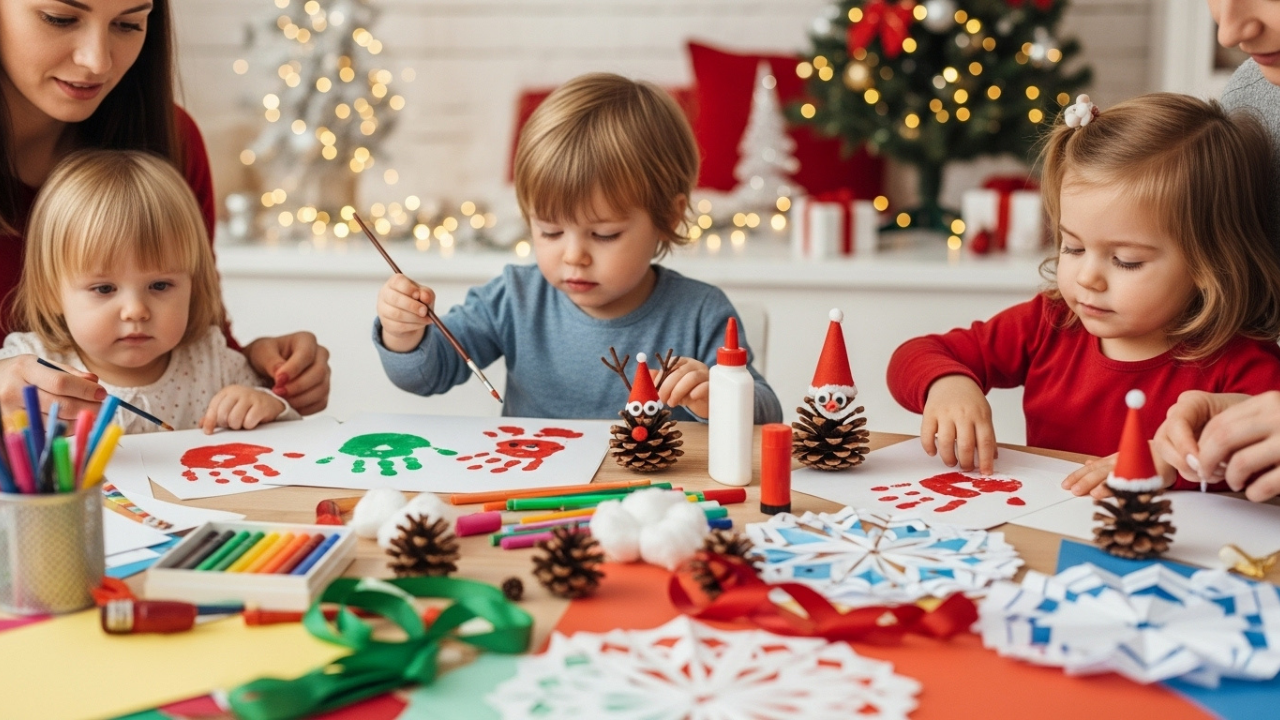
Making Christmas artwork from handprints or footprints is another fun activity. These keepsakes are cute and they also capture a moment in time. They show just how tiny and delicate little hands and feet once were. Use paint and markers to transform handprints into wreaths or trees. Every design has a story to tell and when children see their artwork on the fridge or wall, they feel proud.
Snowflakes of folded paper offer another layer of creativity. Teach your child the basics of folding and cutting paper; then allow them to play around with their designs. Every snowflake is different, which helps kids learn about individuality and creativity while honing precision and coordination.
Recycled or Upcycled Crafts
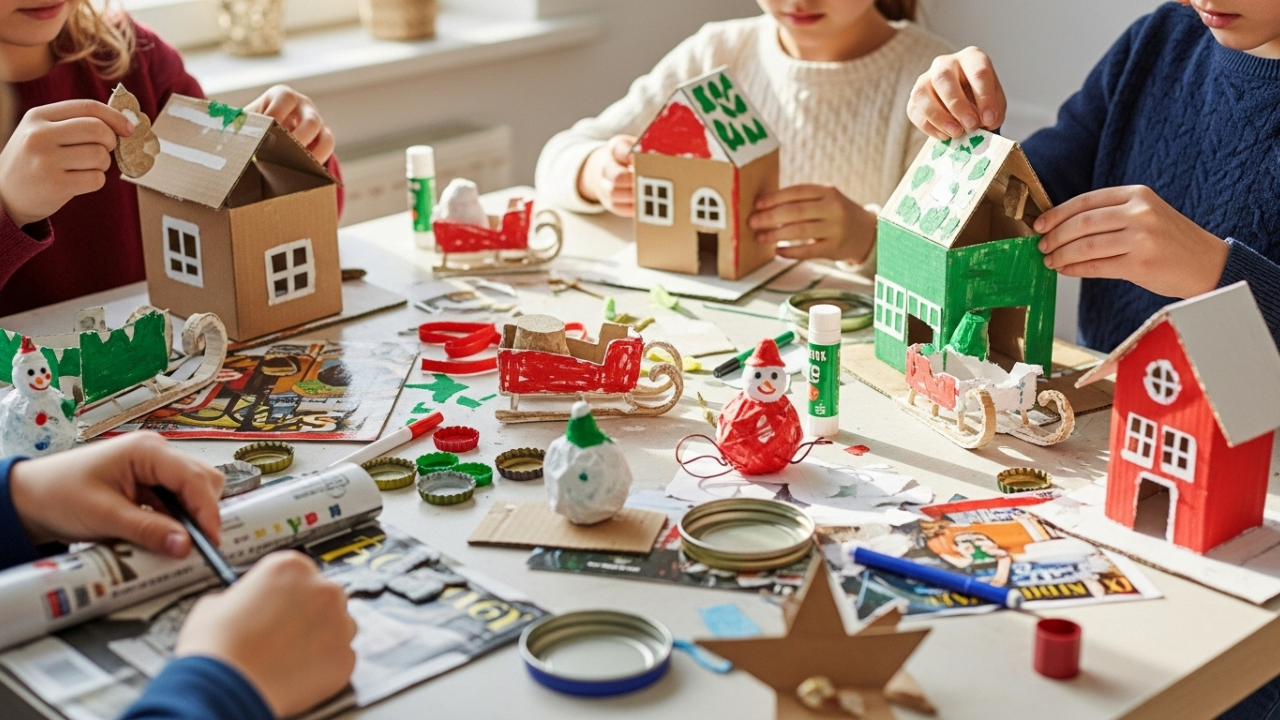
Raining or snowing days are the best time to use resources you already have at home. You can transform cardboard boxes into a tiny sleigh or holiday house. Children can color and decorate the box, turning a humble box into a center of their imagination.
Caps from bottles and old jar lids, along with scraps of paper, can be made into ornaments, mosaics, or holiday figurines. With some strips of ribbon, some glue, your child can create jolly Santa faces, cheerful snowmen, and sparkling stars. Children learn resourcefulness through these projects as they show that it is not always necessary to use expensive materials to be creative.
I remember helping my nieces make a Santa’s workshop from leftover cardboard and magazine clippings. She proudly placed small paper tools and figures inside, telling stories of the elves and reindeer. Using recycled materials made her imagination go wild, and the ordinary became something magical.
Nature-Inspired Crafts
When it’s too cold to play outside, making holiday crafts is a great way to be inspired by nature. Pinecones are perfect for decorating. Kids can paint them white like snow, sparkle them with glitter, or attach them to strings to make ornaments. Every pinecone is special, providing a new challenge and opportunity to create.
You can collect leaves and twigs earlier in the season to fashion either wreaths or little Christmas trees. Through art, children learn to observe and incorporate different shapes, textures, and colours found in nature. When children get into nature-inspired crafts, they learn to slow down and pay attention to small details. This is a valuable 21st-century skill.
Sensory Crafts for Holiday Fun
Sensory crafts provide children with sensory play that engages them. Salt dough ornaments are a classic example. Your kid can mix flour, salt, and water to make shapes like bells, stars, etc. Once dried, the ornaments can be painted and displayed on the tree.
Let your little ones have fun with either shaving cream “snow” or playdough Christmas shapes. Through their explorations with squishy, squelchy materials, they learn about texture and colour by making, mixing, squeezing, and moulding. Children love these activities, which keeps them occupied for a long time. This not only helps with hand strength but also coordination and focusing.
I have seen that when children work on a sensory craft, their energy goes into creating things instead of being rambunctious. You both win; they have fun and you have a calm, enjoyable space to enjoy the holiday together.
Step-by-Step Craft Projects
Help Your Child Enjoy Crafting With Structure
For young children, clear steps guide them but still allow creativity.
1. Handprint Reindeer Ornament: Start with a flat painted handprint on card stock. When the paint is dry, cut around the handprint. Add googly eyes, a red pom-pom nose, and a paper bow. Hang on the tree or use as a gift tag. It is a super easy, memorable project that you can keep for years!
2. Pinecone Santa: Use a pinecone and paint the top white to make it look like Santa’s hat. Take a tiny cotton ball and stick it on the tip, draw a face with a marker, and attach a thread. This activity develops fine motor skills, hand-eye coordination, and gives kids the amazing feeling of creating a mini Santa.
3. Paper Snow Globe: Cut out a circle using a piece of paper and draw a winter scene with crayons or markers. Put a piece of clear plastic over this (like the bottom of a clear container) and sprinkle some glitter inside to act as snow. Seal it and display. This project promotes creativity and storytelling while creating a winter decoration.
Each project equips kids with the ability to think and focus creatively while giving them a chance to express themselves. Making small changes like switching up the colours or shapes keeps kids interested, and each piece can be different.
Engaging Children During Holiday Crafting
Friend, the secret to enjoyable crafting is balance. Guide your child, but allow them to take the lead. Ask questions like, “What colors do you want to use? How can we make this tree sparkle?” By using prompts like these, your child can think independently and use their imagination.
To maintain focus, do an activity for 30 to 45 minutes. When energy is low, switch to a different craft – for example, from painting to an activity using playdough or salt dough. This variety helps retain interest while developing different skills.
It is also fun to get siblings or friends involved, but you may need to guide sharing and working together. When kids work on projects together, they learn skills like patience, communication, teamwork, and more.
Safety Tips for Holiday Crafts
Safety is paramount, especially with young children. Make sure to supervise the use of scissors, small objects, or messy materials always. Choose paint and glue that won’t hurt your child, and skip small parts that could choke.
Make clear guidelines about where crafting should be done. For example, all supplies must be on the table used for crafting, and handwashing needs to be done after every activity. It is important to teach children to handle things with care but offer them the freedom to explore textures, colors, and shapes. Through always keeping activity both safe and enjoyable, we enhance their confidence and independence.
Preserving and Displaying Your Child’s Creations
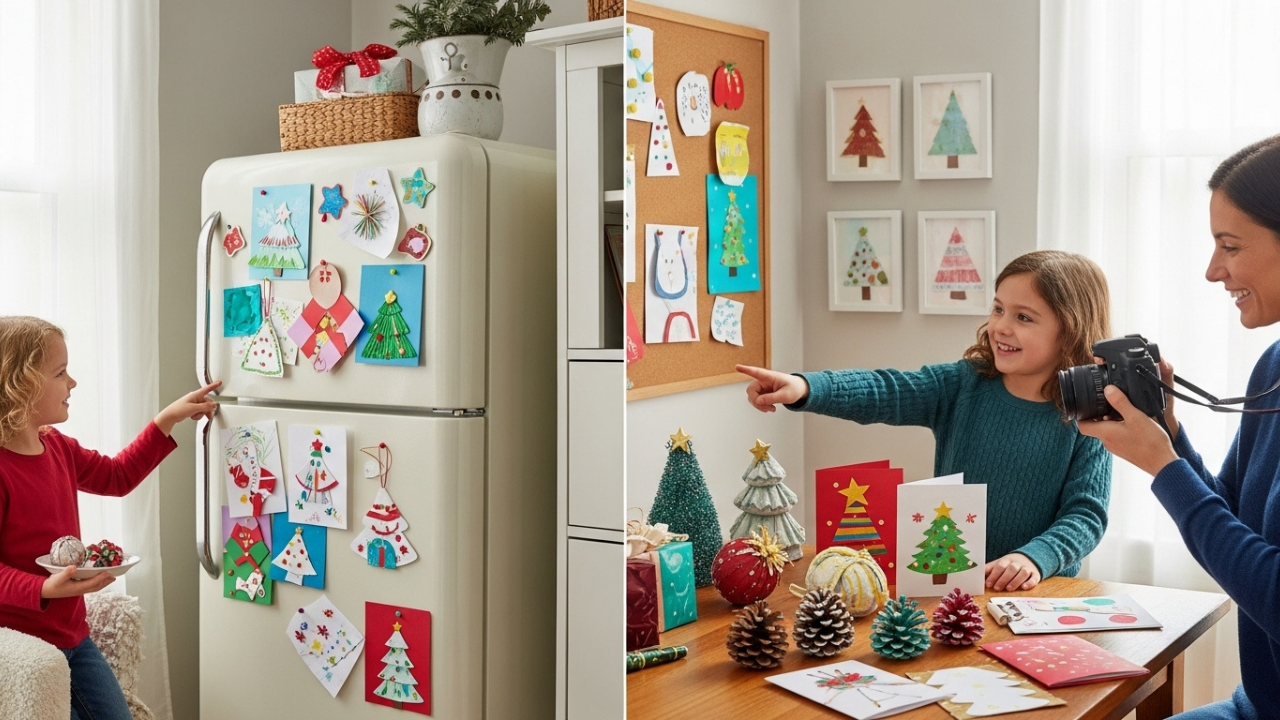
It’s wonderful to display your child’s artwork in your home! It recognizes their effort and inspires them to create more. Consider creating a small gallery in your home. Post your kids’ art creations on a wall, bulletin board, or the fridge.
Another option is gifting crafts to family members. Handmade holiday ornaments, greeting cards, and decorations are thoughtful personal gifts for all to give.
Digital preservation is also a great idea. Photograph completed crafts before recycling materials. As the years go by, you will have a digital collection of their creations, thus avoiding clutter at the same time.
Storytelling Through Crafts
Christmas crafts provide a natural bridge to storytelling. Ask your child to make up stories about the items. The handprint reindeer could very well live in a magical snowy forest. And the pinecone Santa probably has a bunch of elves who work late at night.
This can be extended further by combining multiple crafts in a scene. A winter village can be made of a small cardboard house decorated with pinecone characters and paper trees. Combining craft with storytelling is an excellent way to enhance imagination and language skills while transforming a simple craft into a memorable experience.
Storytelling also strengthens the parent-child connection. When we share ideas, ask questions, and celebrate creativity, we bond and create memories.
Creative Challenges to Boost Problem-Solving
Crafting for Kids: Critical Thinking, Skills, and Holiday Joy
Crafting can also develop critical thinking skills. Give them small problems to solve, like a stable tree out of popsicle sticks or a moving ornament that spins or hangs properly. These projects teach you to try, fail, and try again.
I helped my niece create a cardboard sleigh that was just big enough for her tiny figurines. It didn’t work perfectly the first time, but she learned how to modify and test it to make it better. This process of little wins and learning experiences makes crafting a worthwhile developmental exercise.
Long-Term Benefits of Christmas Crafts
Holiday crafts can help students a lot throughout the school year. Making things helps us use our fingers, see better, and learn to move around. Kids also learn to wait, focus, and solve problems.
Emotionally, crafts boost self-esteem. Finishing a project and seeing it on display really makes the person feel great, just like sharing it with their family. When kids get involved in holiday traditions through making stuff, it helps remind them that they belong to a family and a community.
Buddy, these activities create positive habits, memories, and skills that will help your child as he grows up, not just once-off fun!
Making Craft Time a Holiday Tradition
Making Christmas crafts an annual tradition will create lasting memories. When you set aside one or two afternoons a week for holiday projects, it gives children something to look forward to. Over time, these sessions turn into a family tradition linking creativity, learning, and holiday spirit.
Have your entire family join in, even your grandparents. The collaborative process is not only enjoyable, it also teaches kids the importance of helping one another, sharing, and celebrating together.
Making crafts a family tradition helps kids associate creativity with happiness and connection. It’s a gift that goes beyond material ornaments.
My Opinion
Rain, snow, or cold doesn’t have to be a hassle anymore. Throughout the Christmas season, crafting is a fun indoor activity. A little preparation, imagination, and guidance can turn any indoor moment into a craft opportunity. You can learn and connect through these valuable Christmas crafts.
From simple ornaments to recycled decorations, nature-inspired creations, and sensory adventures, children gain skills, confidence, and festive joy through each activity.
When you make decorations together, you are not just crafting and telling a story, but also solving a problem. When you embrace creativity and a spirit of discovery, friend, your holiday memories last much longer than the season itself!
How to package handmade gifts for shipping safely
How to package handmade gifts for shipping safely, Imagine spending hours crafting a delicate handmade gift. You wrap it up, ship it out, and wait
Best Craft Fairs to Sell Handmade Items in the US
Best Craft Fairs to Sell Handmade Items in the US, It would be striking to spend hours making handmade items, only to have no one

SEO Tips for Etsy Listings for Craft Sellers
SEO Tips for Etsy Listings for Craft Sellers, Picture the scene: spending hours creating gorgeous handmade items but not selling ANY on Etsy. Your products
Trending Handmade Products to Sell in 2025
Trending Handmade Products to Sell in 2025, If you spent hours making unique handmade items for sale in 2025, would you struggle to decide which
