
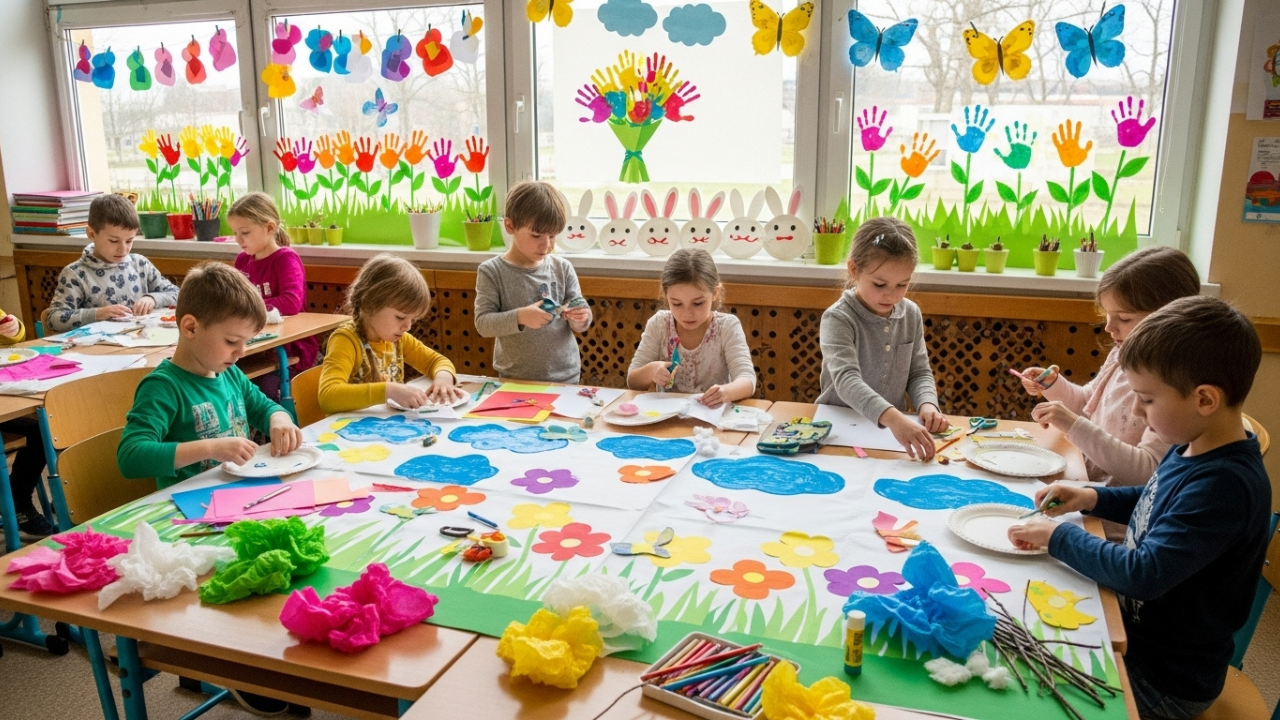
Spring Craft Ideas for Kindergarten Students, Spring is a season full of color, life, and new beginnings, buddy. Now is a better time than ever to create fun crafts that bring the outdoors inside the classroom. Kids who are in kindergarten love to explore things. They are also full of energy. The spring crafts for kindergarten are great for them. They will not only keep them occupied but will also bring out their creativity.
When spring comes, crafting gives you an opportunity to help children develop fine motor skills, express themselves creatively, and build confidence. Kids can experiment with colors, textures, and shapes as they make some paper flowers, animals, or colourful collages through some simple projects. These projects enhance hand-eye coordination.
Key Takeaways
-
Spring crafts help develop your child’s creativity and fine motor skills.
-
Materials are simple, safe, and affordable and are suitable for class or use at home.
-
Teamwork, communication, and problem solving – that’s crafting solutions!
-
Finished projects light up classrooms, creating a learning fiesta.
-
We can modify tasks to focus on specific skill levels and learning outcomes.
Why Spring Crafts Are Important for Kindergarten Students
The kindergarten stage is extremely important for cognitive and motor skill development. Kids get to enjoy crafting in spring which allows them to learn about patterns, shapes, and textures. Moreover, children also get to build social as well as emotional skills through spring crafts. A group project teaches you collaboration, patience, and communication.
I once watched a class create a collaborative spring mural. Some children painted flowers, some added butterflies, while some others cut out clouds with cotton. The energy was high, but each child had a meaningful role. The project gave the kids a great sense of pride. It was effective and turned out really well.
Spring crafts provide sensory exploration opportunities too. When children feel the smooth petals of paper flowers, the roughness of twigs, or the softness of cotton, they develop their sense of touch. This blend of creativity and sensory connection makes them stronger in focus, attention, and observation – key skills of early learners.
Preparing for Spring Craft Time
Getting ready will help your crafting experiences go more smoothly. Begin by gathering safe and accessible materials. Most common things like colored paper, cardstock, glue sticks, child-safe scissors, crayons, markers, fabric scraps, and recycled materials work fine. The use of natural things like leaves, flowers, or twigs creates an added touch to the items.
Organizing materials is equally important. Give each child their own supplies to cut back on disputes and promote independence. Use trays or bins to make distribution easier and have everything within arm’s reach.
Use newspaper or mat for your tables to keep your space craft-friendly. Low tables and toddler-sized chairs allow children to work comfortably. Creating a pretty craft area with a few spring decorations such as little flowers or a rainbow banner will bring excitement and set the mood for crafting.
Finally, have a plan for cleanup. Urge children to help with putting things away or washing brushes or tidying. When cleanup is part of the activity, it teaches responsibility. And it also helps to keep the classroom safe.
Fun and Easy Flower and Garden Crafts
The beauty of spring is depicted through flowers, and decorating flowers is simple and fun. One classic project is creating handprint tulips. Kids can trace their hands on colored paper, cut them out, and use them as flower petals and a green stem drawn or glued to cardstock. This activity will help your little ones develop their fine motor skills while adding color to walls.
Another option is tissue paper flowers. Students rough up strips of tissue paper to form petals. The petals are then glued to green pipe cleaners or straws used for stems. Children love to experiment with shape with a variety of textures to get a colourful result.
A garden mural can be painted in class. The kids will make a flower, a butterfly, or other garden element. All elements will then be assembled into one. It helps students work together as a team when manipulating the lines. Students will also develop a sense of community.
Animal and Insect Crafts
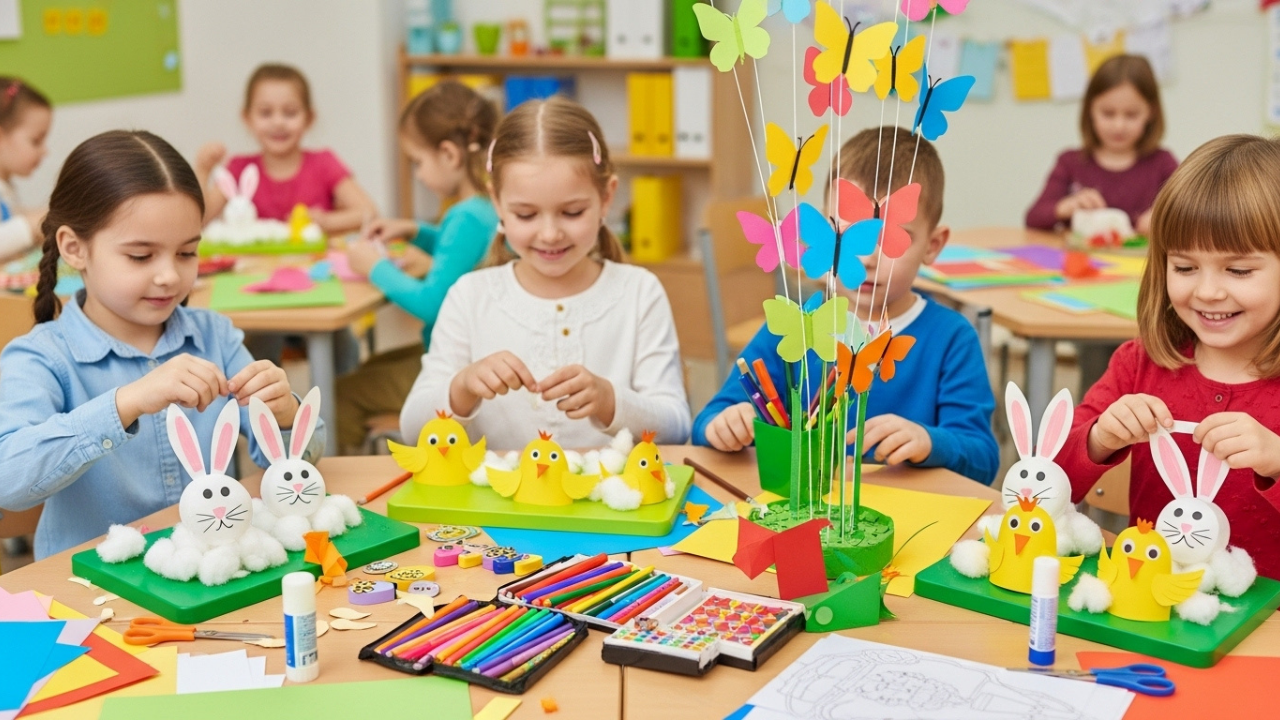
Animals and insects spring to life at springtime, making them the ideal kindergarten craft theme. Kids can make simple bunny crafts using cotton balls, paper cutouts, and markers. They help them learn shapes and textures. Small details like whiskers and paper ears encourage the development of one’s imagination.
Chicks, butterflies, and ladybugs are also popular spring subjects. 090 of 100 students can pick colored paper, markers, and glue to construct these creatures. You can fold paper butterflies or make chicks using cotton balls. This helps strengthen the kid’s hand-eye coordination and fine motor skills. It also promotes storytelling through imaginative play.
One fun classroom activity is a butterfly garden. Children will make butterflies out of paper, decorate, and attach them onto the string or board to create the garden. The butterflies in this display brighten the atmosphere of the classroom and enhance children’s spatial awareness.
Nature-Inspired Crafts
Nature provides endless inspiration for spring crafting. Children can use natural materials such as leaves, flowers, pinecones, or twigs to create projects that incorporate their imagination while also using their sense of touch.
Leaf printing is an easy activity that gives colorful results. Kids use paint to brush leaves and press them onto paper creating different patterns. Through leaf print activity, students observe details of leaves, experiment with colour, and develop hand control.
Collages may contain pressed flowers or twig materials as well. Kids use natural materials on paper to make patterns, animals, and spring scenes. By using uneven and irregular materials, children learn to adapt their play and solve problems.
Nature crafts help students connect with the outdoors while also learning to appreciate their surroundings. Joining together seasonal learning and creative activity helps cognitive and emotional development.
Collaborative Classroom Projects
It is a great time to do a collaborative project with your students in spring. Large murals, hanging décor, or themed bulletin boards enable individual contributions from everyone toward the same overarching goal.
A mural of a tree in spring, for example, can show leaves made from handprints, cut paper, or fabric scraps by the students. When children work on this together, they see the beauty they create when they work collaboratively.
Another idea is a seasonal rainbow display. Every student brings in a colored paper element like a sun, cloud, or raindrop and it makes a bright decoration for the classroom. These projects help children learn cooperation, communication, and creative problem-solving while also enjoying the joys of spring.
Step-by-Step Spring Craft Projects
Guided practice of writing makes the experience smooth and enjoyable for children. Here are a few detailed projects to try in the classroom:
1. Paper Plate Spring Animals
Take paper plates, paper, sketch pens, glue, and cotton balls.
For the Easter craft, teach children to cut ear/chick shapes, decorate plates, and stick cotton balls to the plate. You can display finished work on display boards or walls.
Getting kids engaged like this can sharpen fine motor skills, incite imaginative play, and give them a decoration they’re proud of.
2. Handprint Flower Bouquets
You will need colored paper, some markers, glue, scissors, straws or popsicle sticks.
Have children trace their hands on colored paper and cut them out, making flower petals. Attach petals to a straw or stick as the stem. Organize different handprint flowers in the vase or mural.
Making a vibrant display for the season helps with hand-eye coordination, creativity, and teamwork.
3. Nature Collage Art
Materials: Leaves, twigs, flower petals, glue, paper or cardboard.
Children will arrange natural pieces with the focus on spring. This will include palm trees, gardens, flowers, butterflies, etc. Try out new shapes, textures, and colors.
The process supports tactile learning, helps in creativity and appreciating nature, and also helps students to problem-solve and arrange things.
Keeping Kindergarten Students Engaged
Children lose interest in even the best crafts if the sessions are too long. Short activities of 20–30 minutes work best for kindergarteners. Change it up with some new movement now. Use more tactile, visual, and group activities.
Creative storytelling helps to keep students motivated. Encourage the kids to create stories about their creations. For instance, you can ask them where their butterfly would go or which garden it would explore. Or which bunny would hop into which flowers. This activity boosts language skills, creativity, and socializing.
Praise effort rather than perfection. Regardless of how basic or uneven a creation may be, we can learn from it. Positive reinforcement motivates students to participate in upcoming projects readily and confidently.
Safety Considerations for Young Children
Safety is important while handling young learners. Use materials that are non-toxic and appropriate for children’s ages. Supervise around scissors, glues, or other small objects. Set clear rules for using tools and treating materials kindly.
Organize the craft area to prevent accidents. When doing complex projects, only have a few children at each table. Also, make sure cleaning materials are nearby to clean up spills or if there is paint. If children clean up properly, it is safer, responsible, and also respectful.
Displaying and Celebrating Student Crafts
When they share their work, they feel proud and want to keep going. Hang handprint flowers, paper plate animals, and nature collages on walls, windows, or bulletin boards. Changing up the work on display every few weeks helps keep the classroom environment fresh and new.
Try out having seasonal exhibitions where students can show their work to classmates or parents. Taking pictures of kids’ creations can preserve resources as well as memories. It allows them to see how their thinking has changed over time.
Displaying crafts also supports classroom culture. Making student work visible makes them feel valued and creates confidence, ownership, and belonging in the classroom.
Storytelling and Imaginative Play Through Crafts
Crafts allow children to create their own imaginative stories. Students should create little stories for their works. Making a handprint flower to put in a magical garden, or a paper plate bunny to star in a spring adventure story.
Putting together different crafts to make a scene is a lot of fun. For instance, handprint flowers, a collage of butterflies, and paper bunnies can all be part of a mural of a spring meadow. Every kid puts together their piece while imagining a story that everyone contributes to.
Storytelling helps develop language skills, social skills, and creativity. By hearing and practicing with their fellow students, it is possible to create a world.
Encouraging Problem-Solving Through Crafts
Crafting naturally introduces problem-solving. When the materials did not behave as the students expected—for example, balancing the cotton ball bunnies or spreading the leaves to form a tree.
Simple challenges such as threading yarn together to make flower stems or designing the wings of a butterfly. Kids learn that errors are part of the process that helps them be resilient and think critically.
I remember a class trying hard to make a handprint flower mural together. Some flowers were bending. So, the students brainstormed a way to support the flowers with popsicle sticks and a cardboard base. They not only solved the problem but also learned the importance of teamwork and thinking practically.
Long-Term Educational Benefits of Spring Crafts
Making crafts regularly is good for kindergarteners’ development. Children’s expressive ability, coordination, and visual-spatial awareness improve. Working together on projects is certainly a good way to enhance socialisation skills, communication, and teamwork.
Finishing this craft makes you feel confident, proud, and satisfied. As they engage in problem-solving, kids attain the skills of perseverance and focus. Making them can encourage different ways of thinking and expressing things too.
Spring crafts can be a decoration but they can also be useful tools for learning and development. During this season, students learn by playful hands-on experiences which are colorful too.
Making Spring Crafting a Classroom Tradition
Making crafts a seasonal tradition evokes the anticipation of…
Set a few days aside for some spring crafting, so students can play, give, and share. Encourage older students to mentor younger ones or form groups to work on bigger projects. It builds responsibility and leadership and also creates a community.
Creating things together becomes a nice memory. During the spring each year, children associate the activity with positivity and creativity, and a lot of children participate because of social engagement.
My Opinion
Spring crafts for kindergarteners are more than just fun decorations, they are creative, educational, and collaborative. Using equipment that’s age-appropriate and safe, parents and teachers can involve kids in fun-filled activities that refine their motor skills, develop problem-solving techniques, and provoke imaginative thinking.
Whether the kids have made paper flowers or handprint bouquets and animal crafts or nature-inspired collages, the classroom will be bright and engaging. When children create something using their hands and materials, they gain confidence, pride, and a sense of Gemeinschaft. The best part is that the medieval crafting experience helps students develop their social skills while celebrating spring.
With proper planning, direction, and support, friend, spring crafts can fill your classroom with educational and fun things your students will love to make year after year.
How to package handmade gifts for shipping safely
How to package handmade gifts for shipping safely, Imagine spending hours crafting a delicate handmade gift. You wrap it up, ship it out, and wait
Best Craft Fairs to Sell Handmade Items in the US
Best Craft Fairs to Sell Handmade Items in the US, It would be striking to spend hours making handmade items, only to have no one

SEO Tips for Etsy Listings for Craft Sellers
SEO Tips for Etsy Listings for Craft Sellers, Picture the scene: spending hours creating gorgeous handmade items but not selling ANY on Etsy. Your products

Trending Handmade Products to Sell in 2025
Trending Handmade Products to Sell in 2025, If you spent hours making unique handmade items for sale in 2025, would you struggle to decide which
