
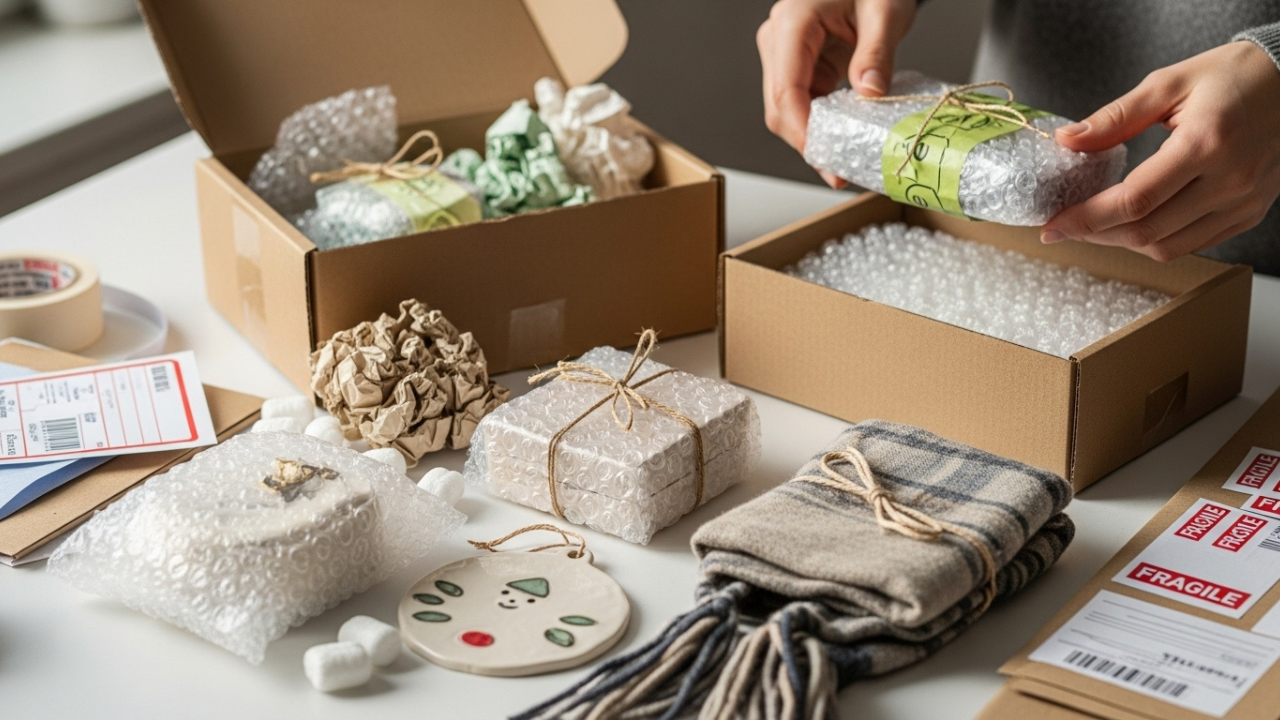
How to package handmade gifts for shipping safely, Imagine spending hours crafting a delicate handmade gift. You wrap it up, ship it out, and wait for the recipient’s reaction. But when it arrives, the item is broken, dented, or damaged. This scenario is stressful and disappointing for any crafter.
Safe packaging is essential for handmade gifts. With the right materials and techniques, you protect your reputation and ensure your customers receive their items in perfect condition. Nothing says “professional” like a carefully packaged gift.
In this guide, you’ll learn how to package your handmade items for shipping safely, even if you’re a beginner.
Key Takeaways
-
Choose packaging materials suited to the size and fragility of your items.
-
Wrap each item individually and use sufficient cushioning.
-
Seal and label packages clearly for safe handling.
-
Select trustworthy shipping companies and insure your valuables.
-
Eco-friendly and thoughtful packaging enhances safety and customer experience.
Understanding the Risks of Shipping Handmade Items
Common Shipping Hazards
Shipping exposes items to many risks. Packages may be dropped, stacked under heavy boxes, exposed to damp conditions, or subjected to extreme temperatures. Fragile items such as glass, ceramics, or ornaments are particularly vulnerable. Even soft items like scarves or toys can be damaged if packed improperly.
Identifying these risks before shipping allows you to choose the right materials and techniques to protect your handmades.
Product-Specific Concerns
Different products face unique challenges:
-
Fragile items: Ceramics, glass, and ornaments can easily break.
-
Elasticized or soft items: Clothing or fabric items may stretch or lose shape.
-
Small accessories: Jewelry or tiny trinkets can get lost without proper protection.
Understanding the type of product helps determine the best packaging method.
Choosing the Right Packaging Materials
Boxes
Sturdy boxes are essential. Corrugated boxes provide strong protection for most items. Choose boxes slightly larger than the product to allow space for cushioning, but avoid overly large boxes that let items shift.
For fragile items, consider double boxing: wrap the product, place it in a smaller box, then put that inside a larger box with additional padding. This extra layer absorbs impact and reduces the risk of damage.
Cushioning Materials
Cushioning prevents movement and absorbs shocks. Common options include:
-
Bubble wrap
-
Foam sheets
-
Packing peanuts
-
Air pillows
Wrap each product individually to avoid contact with other items. Tissue paper can also add a decorative and protective layer for soft items. Ensure nothing touches the box walls or other items directly.
Protective Layers
Multiple layers of protection are highly effective. For example, a glass ornament could be wrapped in bubble wrap, surrounded by foam sheets, placed inside a small cardboard box, and then double-boxed. Even soft or fabric items benefit from tissue paper or thin padding to prevent wrinkling or damage.
Eco-Friendly Options
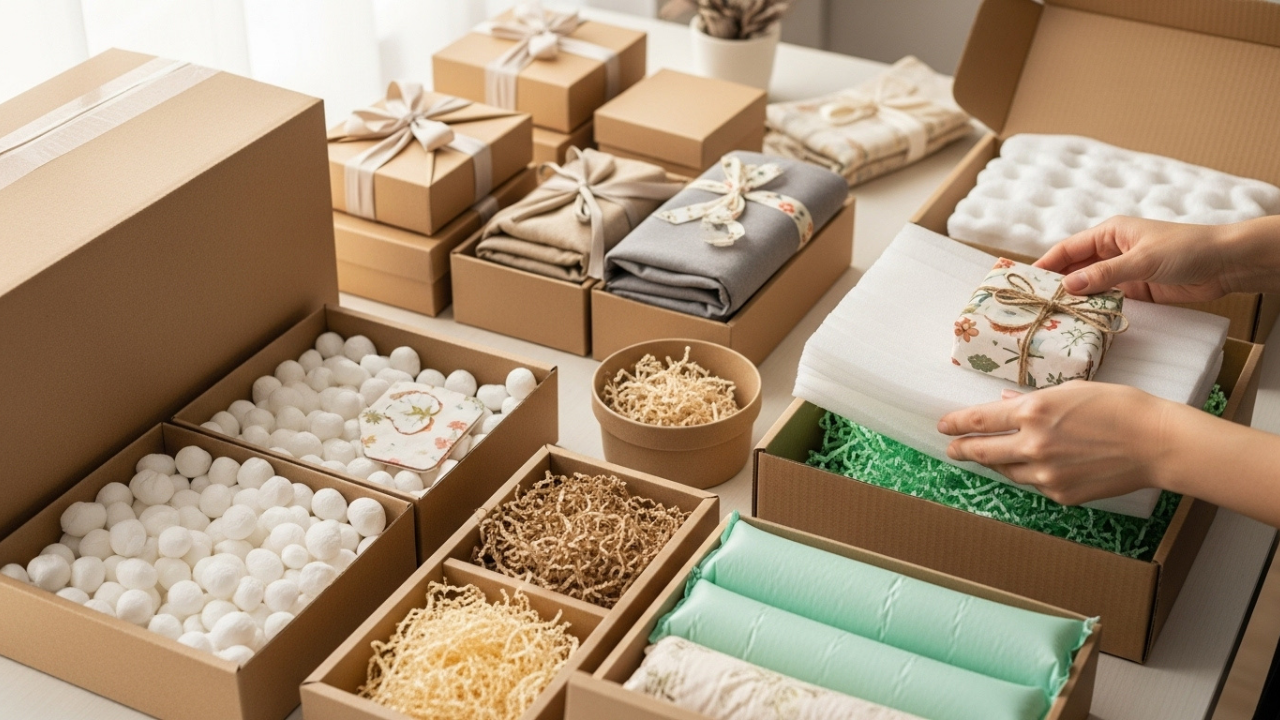
Sustainable options include recycled boxes, biodegradable packing peanuts, and reusable wraps. These materials protect your items while appealing to eco-conscious customers.
A to Z of Packing Different Types of Gifts
Fragile Items
Wrap every piece separately using bubble wrap or foam. Tape the wrapping securely, but avoid taping directly to delicate surfaces. Place the wrapped item in a box with padding on all sides. Fill extra space with packing peanuts, crumpled paper, or air pillows. Double boxing is recommended for extra protection.
Soft Items
To prevent wrinkling or crushing, carefully fold clothing, scarves, or bed covers. Wrap in tissue paper or sleeves and place in a well-fitting box or padded mailer. If shipping multiple soft items, use dividers or extra layers of paper to prevent tangling or pressure marks.
Jewelry and Small Accessories
Small handmade items like earrings or bracelets are easily lost or damaged. Use a small jewelry box or padded envelope, with soft inserts to prevent movement. Wrap chains or bracelets separately to avoid tangling and add tissue paper inside the box for extra protection.
Mixed or Bundled Gifts
For gift sets, organize items by fragility. Place delicate items in the middle, surrounded by softer products. Use compartments, inserts, or dividers to stop movement and prevent rubbing during shipping. Keeping items separate ensures they arrive undamaged and neatly presented.
Sealing and Labeling Packages Properly
Strong Sealing
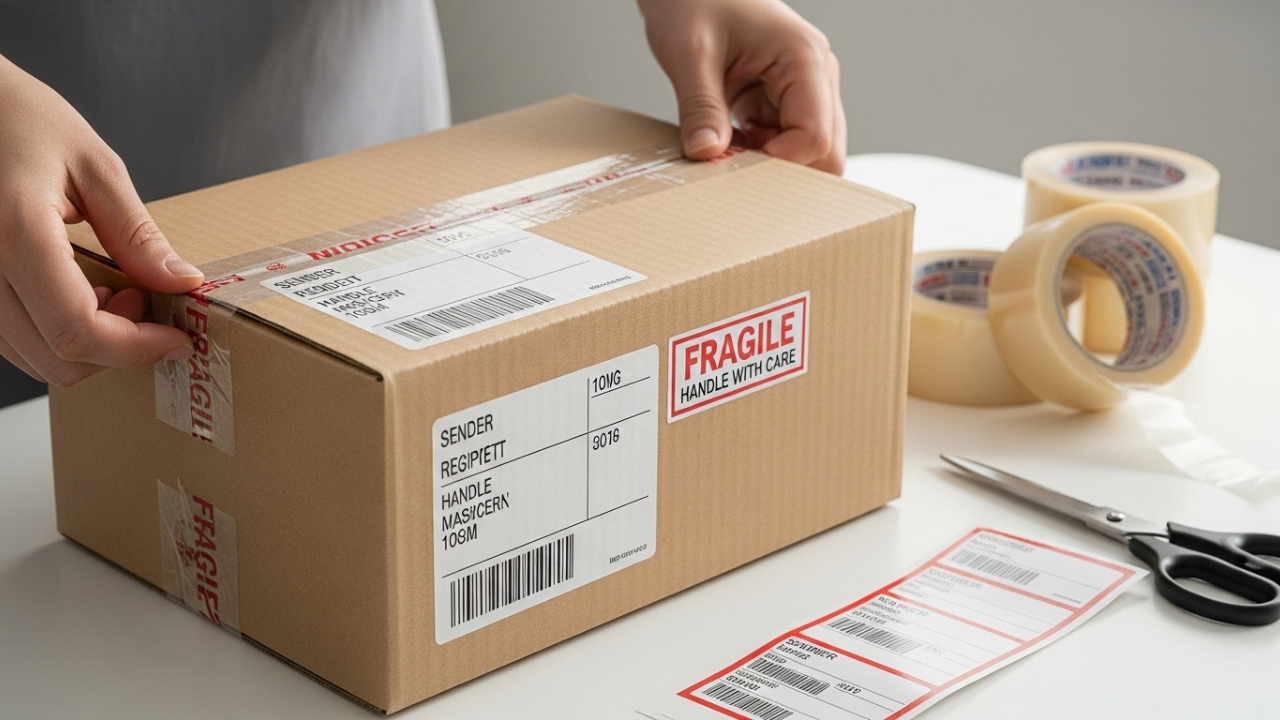
To prevent a box from opening during transit, use strong packing tape on all seams. For heavier or larger parcels, reinforce the corners and edges. Proper sealing reduces the risk of the box falling apart and protects the contents.
Clear Labeling
Labeling is essential for safe handling. Always write both the return address and the recipient’s address clearly. Add stickers like “Fragile” or “Handle with Care” for delicate items.
Use waterproof labels to prevent smudging or blurring. Noticeable labels reduce the risk of misdelivery or loss.
Waterproofing and Protection
For long-distance shipping or unpredictable weather, consider waterproofing the exterior. You can wrap the box in plastic wrap under the tape or place it inside a larger outer box for extra protection.
Choosing the Right Shipping Method
Comparing Carriers
Selecting the right carrier is key for safe delivery. Common options in the US include USPS, FedEx, UPS, and regional services. Each differs in handling practices, delivery speed, and reliability.
-
USPS is ideal for small, light items.
-
FedEx and UPS are better for heavy or fragile items.
Explore different services and choose the one that best suits your product.
Shipping Speed vs. Cost
Faster shipping reduces time in transit and the risk of damage, but express options can be costly. Balance speed and cost based on customer expectations and item value. For fragile handmade gifts, it’s often worth paying extra for reliability.
Insurance Options
Shipping insurance protects both the seller and the buyer. It covers loss, theft, or damage during transit. Insuring parcels for their declared value is inexpensive compared to the cost of replacing handmade items.
Tracking and Confirmation
Providing tracking and delivery confirmation reassures customers. It also allows quick action if a package is delayed or lost.
Additional Tips for Protecting Handmade Items
Avoid Overpacking or Underpacking
Too little cushioning can cause breakage, while excessive packing can compress items and cause shifting. To test, gently shake the box; it should not rattle.
Using Void Fillers
Empty spaces in the box are risky. Fill gaps with crumpled paper, tissue, or air pillows to prevent items from moving during shipping.
Considering Seasonal Shipping Risks
Weather can affect handmade items:
-
Heat can warp wax or melt candles.
-
Cold can make certain materials brittle.
-
Moisture can damage paper, fabric, or wood.
Adjust packing and select shipping options to minimize seasonal risks.
Enhancing Customer Experience
Thoughtful touches like a thank-you note, branded card, or small free gift make unboxing memorable. Safe and thoughtful packaging encourages repeat purchases.
Common Mistakes to Avoid
-
Using Weak Boxes: Flimsy boxes fail to protect items. Always choose sturdy, appropriately sized boxes.
-
Skipping Individual Wrapping: Fragile items must be wrapped separately to prevent scratches or breakage.
-
Neglecting Labeling or Sealing: Packages without clear labels or proper tape risk being lost or damaged.
-
Ignoring Carrier Recommendations: Follow carrier guidelines for packaging, weight limits, and prohibited items to avoid rejected shipments or delays.
Eco-Friendly Packaging Solutions
Sustainable Materials
Recycled boxes, biodegradable packing peanuts, shredded paper, or compostable air cushions are ideal for protecting items while minimizing environmental impact. These materials safeguard your products and appeal to eco-conscious customers.
Reusable Packaging
Consider reusable options like a gift box, fabric wrap, or sturdy storage box. This not only benefits the environment but also adds value to your gift, leaving a lasting impression on the recipient.
Balancing Sustainability and Safety
Eco-friendly packaging should never compromise the safety of your items. Arrange materials to provide cushioning, stability, and protection, while keeping the environmental footprint minimal. Sustainable solutions can be effective, attractive, and safe at the same time.
Post-Shipping Strategies
Following Up with Customers
After the package arrives, check in with your customer. A simple follow-up email asking if the gift arrived safely demonstrates professionalism and care.
Requesting Feedback
Customer input on packaging helps improve future shipments. They might suggest ways to enhance protection or presentation that you hadn’t considered.
Improving Future Shipments
Use insights from each shipment to refine your process. Adjust materials, cushioning, and packing methods to ensure every handmade item arrives in perfect condition. Continuous improvement builds reliability and trust.
My Opinion | Confidently Ship Handmade Gifts
Shipping handmade gifts may seem challenging at first, but with the right approach, it becomes manageable and rewarding. Choosing proper boxes, cushioning, shipping methods, and eco-friendly materials ensures your products are safe and your customers are delighted.
Even beginners can ship safely by testing packages, following proven methods, and keeping seasonal risks in mind. Safe shipping not only prevents damage but also builds trust and enhances customer satisfaction.
When prepared thoughtfully, your handmade gifts can travel across the country safely, arriving intact and bringing smiles to your customers’ faces.
Best Craft Fairs to Sell Handmade Items in the US
Best Craft Fairs to Sell Handmade Items in the US, It would be striking to spend hours making handmade items, only to have no one

SEO Tips for Etsy Listings for Craft Sellers
SEO Tips for Etsy Listings for Craft Sellers, Picture the scene: spending hours creating gorgeous handmade items but not selling ANY on Etsy. Your products

Trending Handmade Products to Sell in 2025
Trending Handmade Products to Sell in 2025, If you spent hours making unique handmade items for sale in 2025, would you struggle to decide which
Best Platforms to Sell DIY Crafts Online for Beginners
Best Platforms to Sell DIY Crafts Online for Beginners, It’s easy to spend hours creating beautiful handmade items like jewelry, candles, knitted toys, and home
