
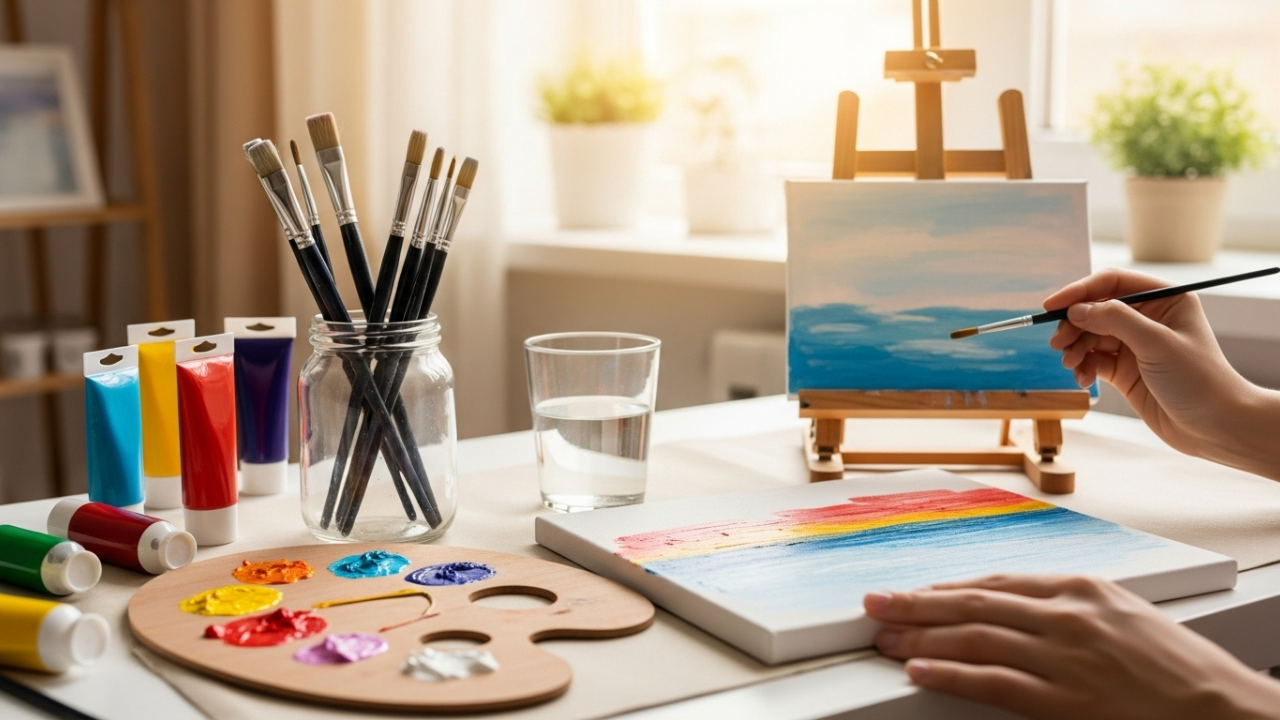
Beginner guide to acrylic painting techniques, Hey, friend! Have you ever seen a beautiful piece of art and wished you could do something similar but weren’t quite sure how? One of the best ways to introduce yourself to the world of art is through acrylic paints. It’s flexible and easy-going, so you can try it out without tricky techniques.
You can utilize acrylics to create decorative art for your home, make handmade gifts, or explore a new hobby. You can start painting today with some simple equipment and guidance.
This guide will cover the essential materials, easy methods, handy tips, and step-by-step examples. When you finish, you will have the skills to create your very own acrylic works while enjoying the process.
Key Takeaways
-
Acrylic painting is beginner-friendly and versatile.
-
Basic supplies are inexpensive and easy to use.
-
Learning simple techniques builds confidence quickly.
-
Practice and experimentation are key to improvement.
-
Each painting is an experience never offered before and which will never be offered again.
Why Acrylic Painting is Great for Beginners
Fast-Drying and Versatile
Buddy, one of the best things about acrylic paint is how fast it dries. With acrylics, you can layer colors or change your mind – it only takes a few minutes. You are able to create gradients, textures, and even watercolor-like effects. This liveliness ensures beginners are not frustrated while experimenting with new things.
Affordable Materials
Getting started doesn’t require expensive supplies. You can easily purchase basic sets of acrylic paints, brushes, and small canvases. To start painting, you don’t need too many expensive things. You can always build up your tools and colors as you gain confidence.
Wide Range of Effects
Acrylics are incredibly adaptable. You can apply them in large strokes for texture or mix with water for washes. They can be used on a variety of surfaces—canvas, paper, wood, fabric. You can experiment with so many different styles, which means any idea can work.
Essential Materials for Beginners
Paints
Use red, blue, yellow, white, and black as a basic set of colors to start. From these, you can mix a wide range of hues. Beginner sets frequently come with tubes of acrylic paint in different shades, which is helpful when working with blending and layering.
Brushes
Different brushes produce different effects. A round brush is good for fine details. A flat brush is ideal for making bold strokes and full coverage. The filbert brush works well to blend edges. Just select a few for now to get started. You don’t need many.
Canvas and Surfaces
You can paint on a stretched canvas, canvas panels, acrylic paper, or wooden boards. Start small – try working on an 8×10 or 9×12 canvas.
Palettes and Mediums
A palette is essential for mixing colors. Plastic, glass, or disposable palettes all work. Acrylic mediums can prolong drying time, provide textures, and create other effects. For starters, not much is needed, but a basic gloss medium or gel can be useful to try.
Optional Tools
You can use palette knives, sponges, and masking tape to add creative effects. By creating texture with palette knives, blending color with sponges, and getting clean edges of shapes with masking tape, you can achieve professional-looking effects even as a beginner.
Basic Acrylic Painting Techniques
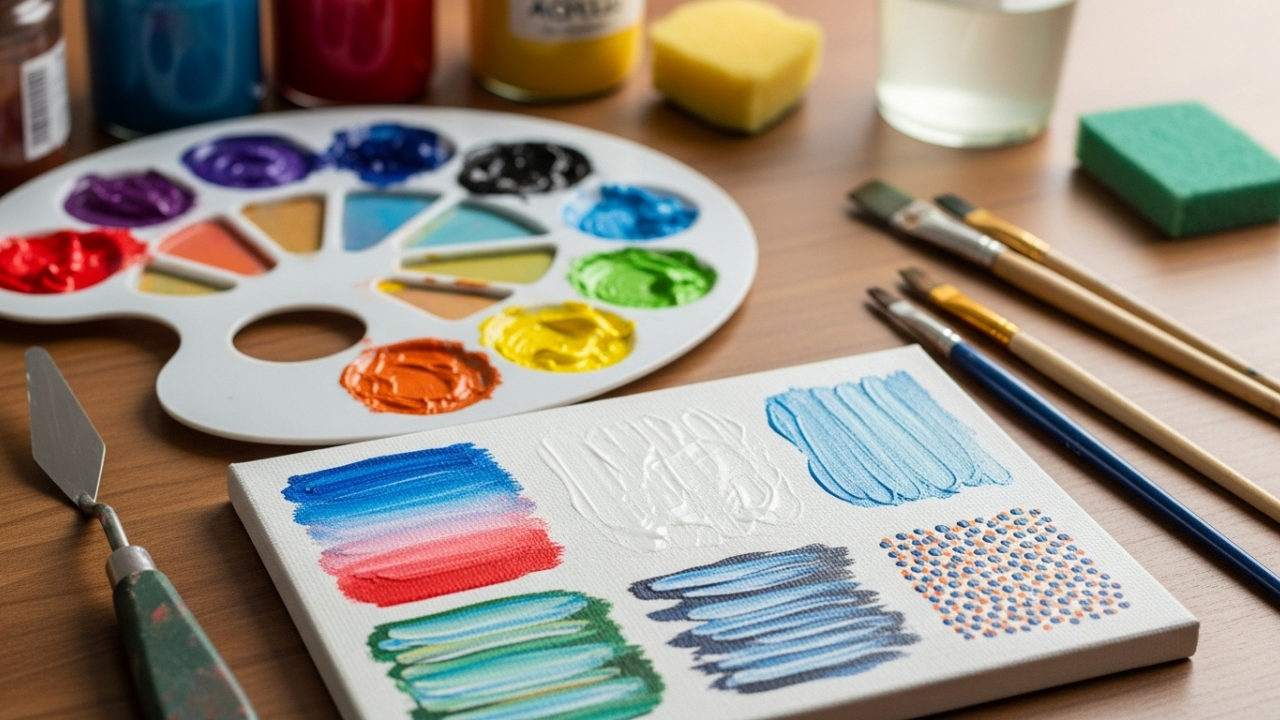
Color Mixing and Blending
Learning to mix colors is essential. Start combining primary colors to make secondary and tertiary colors. Use a palette knife or brush to blend them smoothly. By knowing how colors relate to each other, you can paint with more brilliance and colour harmony.
Dry Brush Technique
The dry brush technique involves the use of paint with very little color. You can use it to make textures and add highlights like in grass, tree bark, or ripples. The technique allows for mistakes, which, on such a large-scale painting, can be added to enhance the painting.
Washes and Glazing
A wash is a very thin transparent layer of paint, usually thinned with water or medium. Applying many layers to get depth and subtlety is known as glazing. These techniques are great for creating soft skies, backgrounds, or landscape effects.
Layering and Building Texture
Acrylics allow you to build layers. Start with a base layer, let it dry, and then add details. Use brushes or palette knives for texture. Layering your paints will help to create depth and a 3-D look.
Stippling and Dabbing
The application of small dots of paint is known as stippling and dabbing. Use a sponge or brush. The two are beneficial for adding interest to surfaces, whether these are patterns or enhancing things like foliage and clouds, or other abstract designs.
Simple Landscape Project Example for Beginners
Let’s create a basic landscape painting, friend.
Materials Needed
-
Small canvas or panel
-
Acrylic paints (primary colors, white, black)
-
Brushes (round, flat, filbert)
-
Palette for mixing
-
Water cup and paper towels
Instructions
-
Lightly sketch the horizon line with a pencil.
-
Use blends of blue and white for the sky starting off the gradient look.
-
Utilize layering and blending techniques to incorporate mountains and trees in midground.
-
Use dry brush or stippling to paint the details on the foreground.
-
To finish, add highlights, shadows and anything else that will help make it pop.
This easy project enables beginners to practice blending, layering, and adding texture in their painting.
Common Mistakes Beginners Make and How to Fix Them
Overloading Brush with Paint
Too much paint can cause messy strokes. Use small amounts and gradually build layers.
Skipping Surface Preparation
Always prime your canvas if needed. Even acrylic paper performs better with a thin layer of white paint.
Not Cleaning Brushes Properly
Dried acrylic is hard to remove. Brushes should always be cleaned right after use with water and shaped.
Rushing the Process
Patience is key. Let layers dry before adding details to avoid blending.
Advanced Techniques for Beginners
Experimenting with Mixed Media
Once you have learnt the basics, try using other materials. Use colors either with coloured pencil, or watercolor, or ink together with acrylics. Mixed media gives artists the freedom to unleash their creativity and add more depth to their work.
Palette Knife Painting
Using a palette knife provides an easy way to create bold textures and abstract effects. You can repeatedly add thick paint, scrape off, or directly mix colors on canvas. Anyone can do it with a bit of practice.
Using Acrylic Mediums
Mediums modify paint properties. Glossy or matte mediums will change the finish, gel mediums will add texture, and pouring mediums will allow fluid acrylic techniques. These can make your painting more lively and create new opportunities without complex techniques.
Creative Projects for Beginners
Simple Still Life
Choose basic objects like fruit, a cup, or a vase. Focus on shape, shadow, and color. Begin by sketching lightly, then layering the background and finally the details. Still life enhances brush control and observation skills.
Abstract Paintings
Help in getting rid of rules. Experiment with colors, brushstrokes, and textures. There’s no need to copy reality; enjoy the process and see what happens. Abstract art is a beautiful way to express feelings.
Mini Landscapes
Make tiny landscapes to practice with skies, mountains or water. Creating art pieces on smaller canvases can help you finish projects quickly and build confidence. You can even create a series of mini paintings as a set.
Personalized Cards or Gifts
You can use acrylic paint to make handmade cards, bookmarks and gift items. When you paint something small, you can improve your brush work and it personalizes gifts.
A Miniature Abstract Painting Project Outline
Materials Needed
-
Small canvas or canvas board
-
Acrylic paints in 3–5 colors
-
Palette knife and brushes
-
Water cup and palette
Instructions
-
Apply a base color wash to the canvas.
-
Use a palette knife to layer thick paint in different directions.
-
Use the brushes for adding colors and dabbing or stipling to add texture.
-
Incorporate small details using fine brushes or sponges.
-
Allow it to dry completely, then stand away and admire your work.
Mini abstract projects are good for trying without pressure and building confidence in acrylic techniques.
Problem-Solving Tips for Beginners
Fixing Mistakes
Acrylic paint is forgiving. Alter your work after it has dried. If a color or a stroke is not working, let it dry and paint over it. You can also blend, layer, or add texture to mask errors.
Avoiding Muddy Colors
Mix colors carefully and clean your brush between shades. When you layer colors instead of overmixing, you get brighter, cleaner results instead of dull, muddy tones.
Managing Drying Time
Acrylics dry quickly. To lengthen working time, use a little water or an acrylic medium. Work in small sections to ensure smooth blending.
Keeping Tools Organized
Friend, a tidy workspace helps you stay focused. Keep brushes, palettes, and paints in order. Clean up immediately after painting to prolong tool life.
Using Acrylic Painting in Everyday Life
Home Decor
Create artwork for your walls, shelves, or desk. Personalized pieces bring your home to life and reflect who you are.
Gifts and Handmade Items
Painted cards, bookmarks or little canvases would make lovely gifts. An emotional value is attached to handmade art unlike others.
Stress Relief and Mindfulness
Painting can be calming. Focusing on colors, brush strokes and textures can help you live in the moment. It’s a simple and enjoyable form of self-expression.
Starting a Hobby or Business
Practicing allows one to sell small paintings, commissions, and crafts. Many artists start as a beginner, and acrylic is the great medium to create quick market pieces.
Storytelling Example: Growth Through Practice
Let me share a story, friend. Alex had always admired paintings but doubted their skills. Their journey commenced with a tiny canvas and the most basic set of acrylics. The first painting showed a lack of finesse in colour forms.
Instead of giving up, Alex painted a new canvas daily. Every time I stitched, the finished pieces improved; colors were mixed more contrapuntal, the brushstrokes were smoother, and layering became more automatic. Within a few months of learning, Alex had a small gallery of personal artwork that they felt proud of and more confident with their skills.
Consistent practice, experimentation, and patience are essential to growing one’s skills in acrylic painting.
My Opinion
Starting off with acrylic painting as a novice shouldn’t be a daunting task, friend. By applying some imagination, the right tools, and a little bit of patience you can turn out lovely artworks.
As you mix and dry brush, layer, abstract, and do mini projects, your confidence and skill build with every technique you learn. With acrylic painting, one can experiment, express feelings, and create beautiful gifts or home décor.
The most important part of painting is having fun doing it. Get your brushes, color, and you can let your imagination flow. Painting can help a person gradually improve their skills while also learning to express themselves artistically.
How to package handmade gifts for shipping safely
How to package handmade gifts for shipping safely, Imagine spending hours crafting a delicate handmade gift. You wrap it up, ship it out, and wait
Best Craft Fairs to Sell Handmade Items in the US
Best Craft Fairs to Sell Handmade Items in the US, It would be striking to spend hours making handmade items, only to have no one

SEO Tips for Etsy Listings for Craft Sellers
SEO Tips for Etsy Listings for Craft Sellers, Picture the scene: spending hours creating gorgeous handmade items but not selling ANY on Etsy. Your products

Trending Handmade Products to Sell in 2025
Trending Handmade Products to Sell in 2025, If you spent hours making unique handmade items for sale in 2025, would you struggle to decide which
