
Best Halloween Crafts for Classroom Decoration
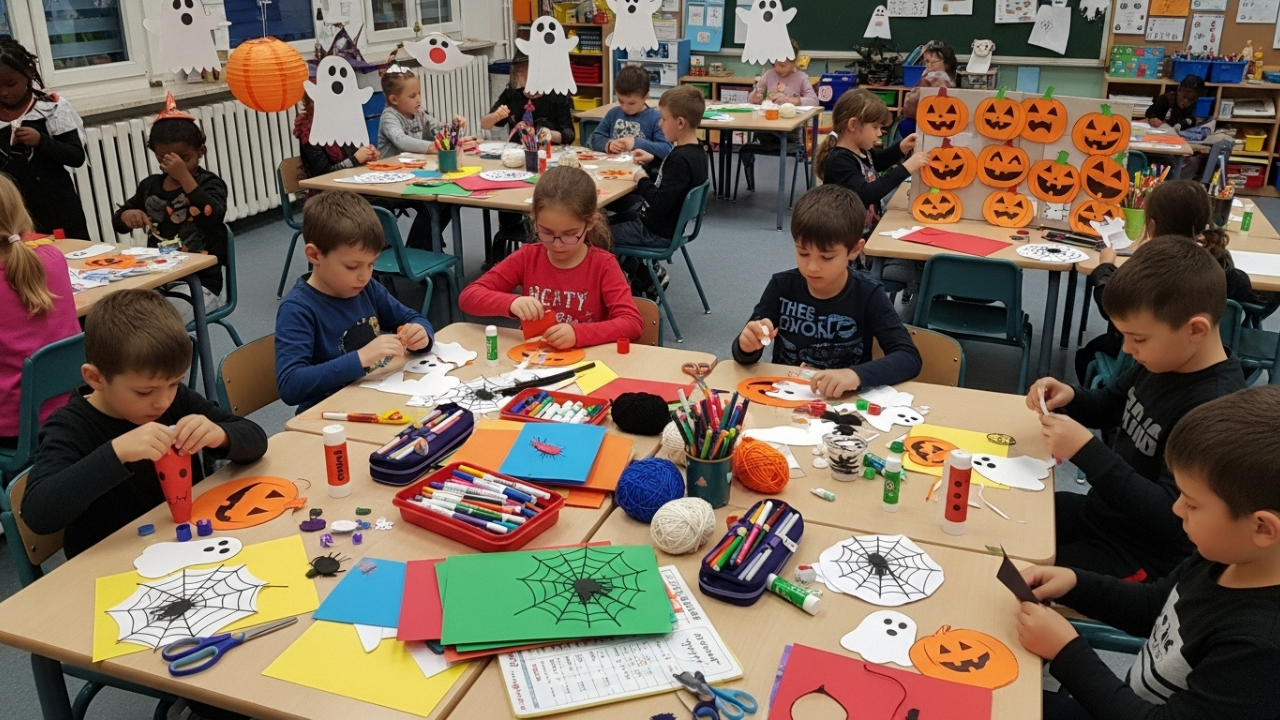
Best Halloween Crafts for Classroom Decoration, The Halloween season brings excitement to the classroom, but it presents a challenge in engaging students in their decorations. It can be very difficult to find creative ways to bring Christmas alive when faced with assignments, schedules, and hyper kids. That’s where Halloween crafts come to the rescue. When students create Halloween decorations for the classroom, not only do they turn each corner of the classroom into a fun, spooky space, they also encourage creativity, teamwork, and hands-on learning.
Halloween activities do more than just decorate the classroom. They allow children to work on fine motor skills, problem-solving, and imagination. When kids make a paper ghost, paint a pumpkin, or create a web out of yarn, they are using their coordination, experimenting with different colours and shapes, and learning how to follow steps to finish a project successfully. Also, the recognition they get boosts their confidence and makes them proud of themselves.
Key Takeaways
-
Halloween activities will make the classroom engaging and visually stimulating.
-
Projects use materials that are easy-to-find, affordable, and safe for students.
-
Doing craftwork helps develop motor skills and creativity.
-
Project sharing improves teamwork and communication.
-
Decorating classrooms can become a cherished tradition.
Why Halloween Crafts Are Valuable in Classrooms
Halloween is more than fun for children as it allows them to craft. This helps kids to develop thinking, get creative, work with their peers, and express their ideas through artwork. At an early age, children learn to think critically and coordinate their hand and eye movements. These skills are further developed through crafting.
One afternoon while on break, a class of students worked together to create a hanging bat garland. Some kids were making shapes with scissors, others were threading yarn, and some were coloring with markers. The energetic vibe got passed on to all. The teamwork taught patience, turn-taking, and communication skills too. The teamwork behind making these decorations is as precious as the decorations themselves.
Moreover, Halloween crafts can build excitement and anticipation for the upcoming festivities. Students feel connected to the celebration by taking part in hands-on projects. They’ll also learn practical skills like measuring, cutting, folding, and decorating.
Preparing for Classroom Halloween Craft Time
The key to a flawless and pleasurable crafting project is preparation. Begin by gathering classroom-friendly materials. Everyday things that you have lying around like colored paper, cardstock, glue sticks, child-safe scissors, markers, crayons, and recyclable materials like cardboard or toilet paper rolls can be used to make Halloween decorations.
Consider safety and accessibility. The materials must not be toxic and suitable for the age group. Younger students shouldn’t have items that could potentially be a choking hazard. Organizing supplies in containers or trays makes it easier to hand them out. Each child should have their own supplies to avoid conflicts.
Creating a designated craft area helps manage chaos. Put newspapers or mats on tables for easy cleanup. Arrange seating to give space for students to work. You can set the mood with a couple of simple decorations like a few banners and small pumpkins in the craft area.
Finally, have a cleanup plan. When students help tidy up, it teaches them responsibility while helping to keep the school environment safe. Understanding that cleaning up is part of the process helps students to easily transition from making to whatever comes next.
Paper Crafts for Classroom Decoration
Paper crafts are flexible, simple to create, and useful in the classroom. One classic project is creating paper ghosts. A group of students can take white paper and cut out ghost shapes. They can decorate their faces with markers. Finally, they can hang them from the ceiling using a string or tape. This activity encourages kids’ inquisitive side, allows them to make shapes, practice cutting, as well as create!
An interesting project is spider webs made of yarn or string. Students can use black construction paper to set the base and arrange strings crisscrossing like webs. You can also add small paper spiders or pom-poms to the decoration. This activity enhances fine motor skills, boosts spatial awareness, and nurtures imaginative thinking.
Pumpkin cutouts are also a classroom favorite. Using some orange paper, students can make pumpkins and draw faces. Leaves or stems can be made from green paper. You can use them on the walls, windows, or bulletin board once they are ready.
Paper chains and garlands are another option. Kids can cut up strips of colored paper, put them together in loops, and make a decoration for the classroom. Students working together to put the chain together reinforces patterns and sequencing.
Recycled and Upcycled Crafts
Using recycled materials for Halloween crafts is a great way to get creative. With some markers, paper, and googly eyes, toilet paper rolls can easily be made into ghosts, monsters, and witches. When writing their own stories, students can create their own characters.
With cardboard boxes and containers, you can make a creepy haunted house, a spooky castle, or a Halloween lantern. Kids will be able to paint, glue, and cut shapes to create make-believe little places. Using recycled materials also helps students be resourceful—they learn to turn something boring into something fun and decorative.
Even jars and cups can be made into a lantern or a candle holder with tissue paper or markers. By using everyday materials, students can have fun experimenting and thinking outside the box without spending a lot.
Nature-Inspired Halloween Crafts
Natural materials enhance the texture and variety of classroom decorations. You can use leaves, twigs, pinecones, and acorns to make tiny witches, pumpkins, or creepy creatures. If you add googly eyes and pipe cleaners, for example, bright-colored pinecones can be spiders or monsters.
Students enjoy using real materials with their hands. It helps their senses and also helps them be creative and exploratory. Through these projects, students will more closely observe nature and the activities of animals through the seasons. Completed birds can serve as decoration or festive dangling things.
Crafting with nature can be especially fun because no two bits are ever alike. Children learn to spot the detail in working with odd shapes and adjust their ideas to what they are working with.
Collaborative Classroom Projects
By creating projects together in a group, students feel a sense of community. Creating large bulletin displays, spooky murals, or themed garlands allows for each student to contribute a piece while working toward the end goal.
As an example, a ‘haunted forest’ mural can contain individual students’ contributions: paper bats, ghosts, pumpkins, and spiders. A larger scene where each child contributes a piece of artwork reinforces teamwork and collaboration. Working together on projects gives kids the chance to work on their communication, patience, and negotiating skills, since they have to coordinate efforts and share materials.
Another idea is a classroom pumpkin patch. Every student makes a pumpkin cutout, decorates it, and contributes it to a collective display. Doing your own thing is a good thing. It makes you proud of your own work. It also helps you learn how what you do is part of the group effort.
Step-by-Step Halloween Craft Projects
When students are clear on the steps, they will enjoy crafting. Here are some exhaustive projects to make the classroom come alive:
1. Hanging Ghost Lanterns
Materials: White paper cups, tissue paper, glue, black markers, string.
To make these ghost cups, simply cover your cups with white tissue paper. Then, draw spooky faces with the help of an art marker. Finally, attach a string to the cup for hanging purposes. They can be put together individually and hung from the ceiling.
This activity is great for helping children develop their fine motor skills and creativity, and it makes a beautiful decoration.
2. Toilet Paper Roll Monsters
Materials: Toilet paper rolls, construction paper, googly eyes, markers, glue.
The process to make an original paper craft is simple: wrap a roll in colored paper, cut wings or arms, stick two eyes on the roll, and add other decoration with a marker or sticker.
Toddlers and older students alike have fun imagining monsters using any item. This is a great project that can get students to think critically and resourcefully. It also increases engagement through hands-on learning.
3. Spider Web Yarn Boards
Materials: Cardboard, yarn, scissors, glue.
Students cut cardboard into a square or any shape and then wrap yarn to weave a spider web. Add paper spiders or other details.
This project engages students while improving hand-eye coordination, spatial reasoning, and concentration. Each child can create something original.
Every project yields something for students to share as a trophy. It provides a great sense of accomplishment.
Keeping Students Engaged During Craft Sessions
Even the most exciting crafts may bore a child if the sessions are too long. Short, interactive blocks of 20–40 minutes work best. Following the same pattern:
-
Introduce variation by alternating tactile, visual, and collaborative tasks.
-
Storytelling and imagination keep students motivated. Ask children to name their creations or create a backstory. For instance, they could make the bat hanging from the ceiling ‘Benny the Brave Bat’ and write a mini story about its Halloween experiences.
-
Praise and celebrate effort rather than perfection. Even small or imperfect projects deserve recognition. It gives students confidence and keeps them excited for future opportunities.
Safety Considerations for Classroom Crafts
When working with several students, safety is paramount. Choose non-toxic, child-safe materials and supervise the use of scissors, glue, and small objects. Make rules such as waiting for turns and not breaking things.
Keep the craft area organized and uncluttered. When doing complex activities, limit the number of students at one table at a time. Have cleaning supplies on hand for spills, sticky glue, and paint mishaps.
Just because it’s safe craft time doesn’t mean creativity stops. If students have the correct materials and are guided well, they can explore freely and safely.
Displaying and Preserving Classroom Creations
Showcasing student artwork boosts pride and engagement. You can hang ghost lanterns, spider webs, and pumpkin cutouts on bulletin boards, windows, or ceilings to create a festive atmosphere.
Consider creating rotating displays. One bulletin board could display spiders this week and pumpkins the next week. This allows for a fun classroom atmosphere where children’s work is highlighted continuously.
Digital preservation is another option. Suggest creating a seasonal classroom scrapbook by taking photographs of each project. Students can build lasting memories and revisit old creations to see how their skills and imagination have expanded over time.
Storytelling and Creative Play
Crafting combined with storytelling deepens engagement. Motivate students to create characters, adventures, or scenes with their creations. For example, students could design a haunted house where their classmates are the props, and each one is assigned a part in the story.
Storytelling improves language skills. When students engage in collaborative writing, they must communicate their ideas, listen to others, and work together to build a unified narrative. These skills help not only in the classroom but also in social and academic growth.
Encouraging Problem-Solving Through Crafts
Crafting naturally introduces problem-solving. Students have to pay attention to how they will join materials together, make decorations stand, and attach items that are hanging. An easy challenge is threading yarn to make a web, while a trickier task is balancing a toilet paper roll monster.
I remember watching a class work on a group pumpkin patch display. The students came up with ideas to prevent pumpkins from falling using cardboard and tape. They not only gained practical experience but also learned the value of working together and learning by trial and error.
Long-Term Educational Benefits of Halloween Crafts
When children do crafts regularly, it becomes beneficial for their development over a longer time. Copying shapes makes children stronger physically, mentally, and emotionally. Partnering on projects improves socializing and collaboration.
Completing a craft provides confidence, pride, and satisfaction. By practicing repeatedly, students become more patient and focused. Combining storytelling with creative play helps support child development in many ways.
Halloween crafts in the classroom do a lot more than serve as decorations. They teach children problem-solving skills, persistence, working through failure, collaboration, and more. Halloween crafts make learning fun and memorable.
Making Halloween Crafting a Classroom Tradition
By engaging students in crafting, anticipation is created into a ritual. Assign a day or week to decorate and give students time to tinker, contribute, and collaborate.
Encourage older students to help younger ones, or assign bigger projects to small groups of students. It gives students a chance to lead people as well as take a sense of ownership.
Routines let kids have fun with creativity, working with other kids and celebrating the season. Over the years, these traditions become a much-loved part of the classroom culture.
My Opinion
Using Halloween crafts in the classroom are a great way to work together and learn while being creative and festive. Teachers can use materials that are easy, safe, and accessible for students to begin projects that strengthen the motor skills and use problem-solving mechanisms. These materials will also help students to imagine better.
In the classroom, activities from paper ghosts and recycled monsters through yarn spider webs to the entire mural enhance animation. Shared crafting experiences can build confidence, pride, and great memories.
Friend, if you have the right preparation, guidance, and encouragement, Halloween crafts for the classroom make a creative, engaging, and festive space students will enjoy again and again.
Share:
More Posts
How to package handmade gifts for shipping safely
How to package handmade gifts for shipping safely, Imagine spending hours crafting a delicate handmade gift. You wrap it up, ship it out, and wait
Best Craft Fairs to Sell Handmade Items in the US
Best Craft Fairs to Sell Handmade Items in the US, It would be striking to spend hours making handmade items, only to have no one

SEO Tips for Etsy Listings for Craft Sellers
SEO Tips for Etsy Listings for Craft Sellers, Picture the scene: spending hours creating gorgeous handmade items but not selling ANY on Etsy. Your products

Trending Handmade Products to Sell in 2025
Trending Handmade Products to Sell in 2025, If you spent hours making unique handmade items for sale in 2025, would you struggle to decide which
