
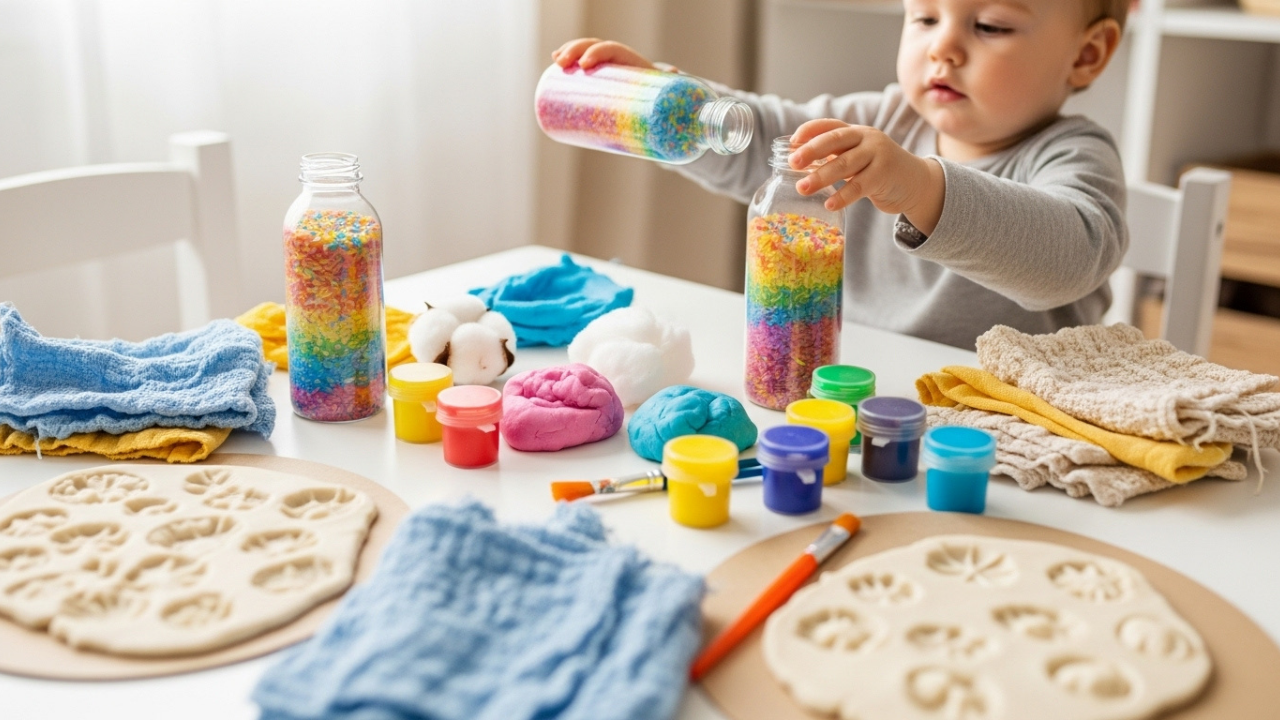
DIY Sensory Crafts for Toddlers with Safe Materials, Keeping toddlers engaged can be a full-time job, my friend. Kids are endlessly curious, constantly energetic, and require hands-on experiences to learn. On a quiet day at home when kids can’t go outside to play, sensory crafts are the answer! They engage tiny hands while also fostering creativity, developing motor skills, and creating opportunities for learning through play activities.
Sensory crafts are not only fun but also a learning experience for toddlers. They can learn all about textures, colors, and shapes, as well as cause and effect in a controlled and safe environment. With the right materials, instructions, and a great deal of imagination, you can make things out of ordinary household items that make use of the body and mind.
Key Takeaways
- Sensory crafts are a great hands-on way for toddlers to learn and stay safe.
- Household items or safe, non-toxic materials are used for most projects.
- These activities enhance skills, coordination, and cognitive growth.
- Making stuff helps children think and solve problems.
- Doing crafts with your little one enhances bonding and confidence.
Why Sensory Crafts Are Important for Toddlers
At this age, toddlers learn through touch, sight, and movement. Sensory activities are a fun way to explore the world in an organized manner. When children squish, stir, and mold things, they learn about textures and pressure, as well as how things respond.
One afternoon, I caught a glimpse of my niece playing with colored rice in a bottle. She shook, rolled, and listened to the sound it made. This simple activity kept her engaged for almost half an hour while stimulating her hearing, sight, and touch. While these may seem trivial, they are important to develop problem-solving, coordination, and attention to detail.
Sensory crafts also support emotional growth. Playing with peers is an important communicative event for toddlers. Through safe and supervised craft activities, kids channel their feelings positively. Crafting also gives them the opportunity to try out things, make decisions, and see the results.
Preparing for DIY Sensory Craft Time
Preparation is key, friend. Before starting, gather safe, toddler-friendly materials. You can make most projects with everyday household items such as flour, rice, pasta, cotton balls, soft cloth, or playdough. Always choose non-toxic, washable paints for paint-based activities.
Set up a mess-friendly craft space. To protect clothing, put on aprons or old shirts and cover surfaces with newspaper or a plastic mat. Young children are beginning to love independence, so arranging materials for them to reach whatever they need independently while supervised will help promote their confidence and sense of control.
Finally, create a calm and engaging environment. Your craft activity will feel extra special with some soft background music, lovely natural light, or a little table with mini chairs. When children see that it is a time for creativity, they engage with earnestness and excitement.
Easy Texture Exploration Crafts
Texture-based sensory activities are perfect for toddlers. They create a sense of touch, stimulate the imagination, and enhance motor skills.
Sensory Bottles: Get a plastic bottle and fill it with anything useful like rice, lentils, pasta, or beads. Tightly seal it and let your kid shake, roll, and watch the materials move. Engaging toddlers in this fun and safe activity helps develop hand strength and coordination.
Cotton Ball Collages: Let your toddler glue cotton balls on paper for clouds, snowmen, or soft animals! This activity helps develop fine motor skills as children learn how soft the material is and how to place it according to their design.
Textured Paper Art: Kids can create shapes and patterns with materials such as felt, sandpaper, or foil on cardboard or cardstock. Crafting provides multi-sensory stimulation and encourages creativity.
Color Exploration Crafts
Through color sensory activities, toddlers can safely experiment with visual stimulation.
Finger Painting: Toddlers can experiment with the blending and interactions of colors using non-toxic and washable paint. Motivate them to try using different fingers, hands, or even a soft brush. It is better to experiment than to perfect; it builds confidence and creativity.
Colored Rice or Pasta: You can dye some rice with natural ingredients like turmeric or beet juice. Then let your child sort it, scoop it, or fill containers. This activity identifies colors and encourages sensory play and hand-eye coordination.
Water-Based Color Mixing: Even simple water-based projects, such as mixing up colors of water in cups with spoons or droppers, are a completely safe activity for toddlers to learn about blending colors and observing results.
Shape and Pattern Crafts
Activities that present shapes and patterns benefit toddlers. The soft clay, playdough is great for making easy geometric shapes as well as stacking. Using cookie cutters, you can pick out shapes such as stars, hearts, or circles. Let your child decorate these with safe markers or small stickers.
Foam stickers and soft stamps also work well. Get little hands creative and help them create patterns on paper. These activities develop the mind, lay down early mathematics, and aid coordination.
While making crafts, toddlers not only learn to create things, they also learn to be patient and focus. Just a few minutes spent arranging shapes or stamping with clay will be a worthwhile learning experience. Hence, these activities serve to be fun and developmental.
Nature-Inspired Sensory Crafts
There are endless opportunities for fun and safe sensory experiences using nature-based materials. Children could touch and feel the texture of sand, water, leaves, and flowers. Kids can feel textures, stack items, or make simple collages.
One example, a leaf collage, allows toddlers to glue or press leaves onto paper. This helps them explore shapes, colours, and patterns. You can put things that float in a water sensory tray, like cups or little toys. It encourages them to experiment, use fine motor skills, and think scientifically at an early age.
Even tiny amounts of sand or soil in a tray will keep children playing for hours. Little kids love to dig, scoop, and pour. It’s a great way to build coordination and explore concepts like cause and effect.
Step-by-Step DIY Sensory Projects
When structured, the creation can be easy, fun, and educational for toddlers. Here are some detailed projects you can try today.
1. Rainbow Rice Sensory Bottles
Things needed: Clear plastic bottle, colored rice (dye using safe ingredients), small toy or beads.
Fill the bottle with layers of colored rice and add any toy or bead between two layers. Seal tightly.
Your toddler can shake, roll, or watch the movement of the objects to develop their hand-eye coordination and visual tracking.
2. Edible Finger Paint Ornaments
Use non-toxic and edible colors (yogurt mixed with colour works), cookie cutters, paper.
Spread paint on paper. Let your toddler press his or her hand or finger and create prints. Use cookie cutters to form shapes like stars or trees.
Toddlers safely taste or touch materials as they explore colour mixing, textures, and shapes.
3. Soft Dough Impressions
You will need your own play-dough made from flour, salt, and water and some toddler-safe tools.
Grab the dough and roll it out (if you can, stretch it but do not push harder) and ask your child to press toys, stamps, or leaves to get impressions on the dough.
Using the scissors can help children improve fine motor skills.
Each activity lets your toddler explore on their own, with an option for guided discovery. It is important to allow your child to explore but let them ask for assistance when they require help.
Engaging Toddlers During Craft Time
One of the toughest things, friend, is keeping the little ones focused. Without overdoing it, of course. Short bursts of 15 to 30 minutes that are imaginative and entertaining prove most effective.
Try to provoke curiosity with soft open-ended questions like: “What do you think will happen if you press here? Which one do you want to try next?” Joy is natural so we celebrate every success big or small.
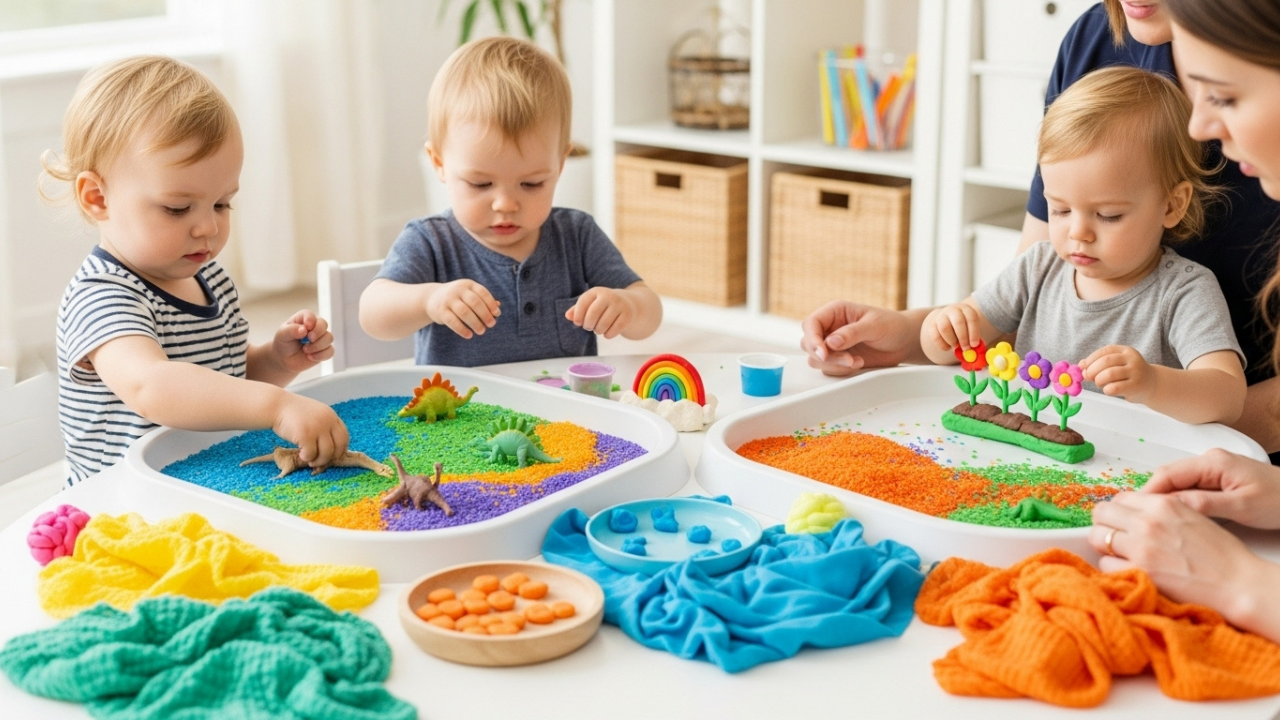
Using storytelling makes crafts more engaging. You can also make “dinosaur land” with some colored rice or a flower garden with play-dough. Kids enter the imaginary scene, where they learn effectively.
Rotating materials is another way to maintain engagement. When your little one is bored with rice or paint, simply switch to water, textured fabrics or soft clay. Doing different activities not only helps maintain good energy levels, but also lets your child experience different textures and sensations.
Safety Considerations for Toddler Crafts
Safety is non-negotiable, especially for toddlers. Always supervise crafting, particularly with small items, powders, or any material that can be ingested. Use only non-toxic, edible, or age-appropriate materials.
Set rules on how they will use scissors, markers, etc. Help toddlers learn how to use things carefully but allow them to try. Monitoring independence helps to enhance confidence while accident-proofing.
Cleaning up is also part of safety. Encourage toddlers to help wash hands and tidy the area. When cleanup is a fun game, children will participate. For example, have them race to put away toys in the correct container.
Preserving and Displaying Toddler Creations
Displaying the creations of toddlers is important because they take pride in their accomplishments. Set aside a space at home – on a shelf, a bulletin board, or a rotating frame – for these crafts.
Another great idea is offering crafts as gifts to family. A rainbow rice bottle or a dough impression serves as a unique handmade gift choice, showing thoughtfulness and creativity.
Digital preservation aids in the keeping of countless memories. Snap pictures of your toddler’s creations and save in an album! This collection shows growth in creativity, skill, and imagination over time. Your child can see older projects and celebrate progress.
Storytelling and Imaginative Play Through Crafts
Sensory crafts provide a natural bridge to storytelling. Get toddlers making up little stories about their creations. The rice in their bottle might stand for a mystical river, or the impressions their dough makes might be footprints of imaginary creatures.
Combine multiple crafts into imaginative scenes. A playdough garden filled with fabric flowers and small models becomes a special world for stories. Making something and creating a story together enhances language development, creativity, and problem-solving.
Connecting with toddlers through storytelling is very nice. Asking questions, listening to their ideas, and joining in shared play helps to strengthen emotional connections while learning becomes fun.
Creative Challenges to Promote Problem-Solving
Sensory crafts teach cause and effect naturally, but you can build in small challenges to encourage problem-solving.
For example, encourage your toddler to:
-
Pour rice from one container to another without spilling.
-
Build simple towers using soft dough or blocks.
-
Arrange leaves or fabrics in specific patterns.
Every activity strengthens attention, motor skills, and thinking skills. When things don’t go to plan, toddlers learn persistence and thinking outside the box, both essential early development skills.
Long-Term Benefits of Sensory Crafting
If you do sensory crafts often, it’s very good for them. Kids develop skills, coordination, and cognitive skills. Sensory experiences help their language development when toddlers talk about things they touch, see, and do.
Emotionally, art and crafts nurtures confidence, curiosity, and patience. Children are happy when they get to create and try something new and finish a project. These experiences eventually teach our children to become resilient, think independently, and feel accomplished.
Sensory crafts also strengthen parent-child bonds. Doing things together, going on adventures, and telling stories create lovely memories. Creating routines also helps them to learn and become creative routinely.
Making Sensory Crafting a Routine
When we do something daily it becomes a habit; similarly, daily crafting will convert one to a master craftsman. Just a few brief sensory sessions every week will help toddlers anticipate, prepare for, and enjoy such play.
Keep materials accessible but organized. Change activities to prevent boredom. This will also introduce your child to various textures. Having siblings or friends can make playing the game social and teaches cooperation, sharing, and teamwork.
Daily crafting with sensory activities is beneficial for development, also prevents surprises, and creates joyful moments in the day. Your toddler starts to trust, love, and enjoy it.
My Opinion
Making sensory crafts for toddlers at home will not just get you cool things to play with. It will also help you learn important skills and develop a connection with them. You can transform everyday moments into engaging and exciting, interactive learning experiences that stimulate the mind and body using safe, household-friendly materials.
Each new project will help your toddler develop essential skills. Your little one will explore textures, mix colors, recognize shapes, create imaginative stories, and solve problems. Most importantly, it deepens your bond, and this shared time will help you make lasting memories for this holiday or every day.
Next time your toddler asks for a playdate or you are stuck indoors due to rain, remember, with a few ingredients and a little imagination you can easily transform your home into a sensory play bonanza!
How to package handmade gifts for shipping safely
How to package handmade gifts for shipping safely, Imagine spending hours crafting a delicate handmade gift. You wrap it up, ship it out, and wait
Best Craft Fairs to Sell Handmade Items in the US
Best Craft Fairs to Sell Handmade Items in the US, It would be striking to spend hours making handmade items, only to have no one

SEO Tips for Etsy Listings for Craft Sellers
SEO Tips for Etsy Listings for Craft Sellers, Picture the scene: spending hours creating gorgeous handmade items but not selling ANY on Etsy. Your products
Trending Handmade Products to Sell in 2025
Trending Handmade Products to Sell in 2025, If you spent hours making unique handmade items for sale in 2025, would you struggle to decide which
