
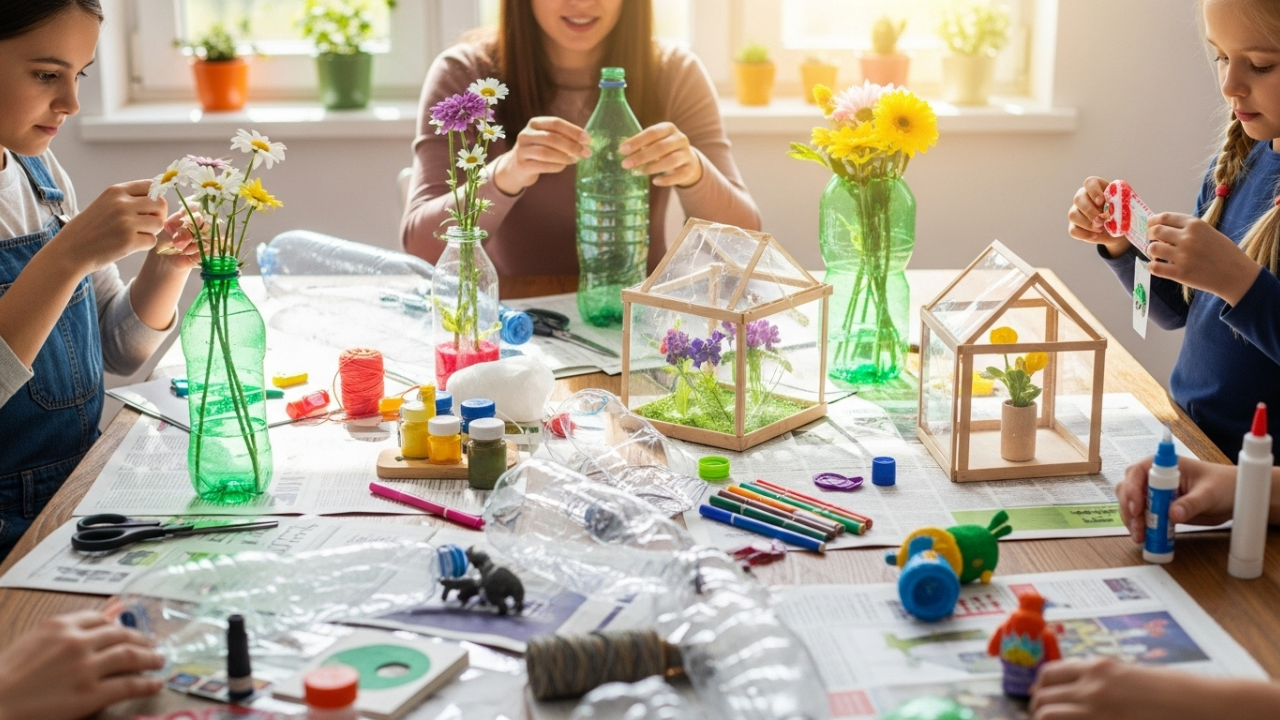
How to Make Eco-Friendly Crafts from Plastic Bottles, Plastic waste is now becoming a growing concern, friend, whether it is at home, school, or the playground. One of the simplest ways to push back is with crafty plastic bottles. Using reclaimed and recycled materials as building products for craft projects not only reduces waste but also encourages creative and sustainable ideas. Furthermore, it produces wonderful products which are functional at home or in the classroom.
Working with plastic bottles is something more than a fun activity. It encourages problem-solving, creativity, and hands-on learning. Both children and adults can turn waste bottles into beautiful decorative pieces, toys, and garden useful items. All projects enhance fine motor skills and spatial awareness and provide a sense of satisfaction when displaying or using the finished project.
Key Takeaways
-
Crafts with plastic bottles help to cut down waste.
-
Projects are simple, safe, and beginner-friendly.
-
These creative activities build critical thinking and skills.
-
Finished projects can beautify houses, gardens, or classrooms.
-
You can do these activities with your kids or alone.
Why Eco-Friendly Crafts Matter
Plastic pollution is very harmful and a big challenge to our planet. Every day, millions of bottles get trashed and a large part of that gets sent to landfills or oceans. This harms wildlife and creates more issues for the environment. Making crafts with plastic bottles not only reduces waste but also educates children on developing sustainable habits.
Arts and crafts using recycled materials build hands-on sustainability. Kids just don’t need to be told that waste is bad. They must get a practical solution too. For instance, you can show them how a discarded bottle can become a flower vase, toy, or bird feeder. A tactile experience that lessens creativity and responsibility sticks a lot longer than words.
Eco-friendly crafts also encourage mindfulness. Children and adults start thinking critically about the lifecycle of materials and experiment with ways to reuse these otherwise waste materials and upcycle them. My friend, how exciting it is to see a mere bottle transform into a beautiful piece that was once going to be trashed!
Preparing for Plastic Bottle Crafting
Preparation is key for safe and enjoyable crafting. Begin by collecting plastic bottles of various sizes. Clean and dry them thoroughly before use. You can use soda bottles, water bottles, or juice containers.
You will also need scissors, glue, markers, paints, string, and other recyclable things to decorate your DIY project. Beads, buttons, or fabric scraps work well for embellishments. Always make safety your top priority using child-safe scissors and non-toxic paints. You can also use gloves when necessary.
A creative workspace goes a long way. Put newspaper or a plastic sheet over tables to protect surfaces. Arrange materials in trays or containers for easy access. This arrangement is precious in classrooms or a group crafting place where you can work on the craft together.
Friend, organization matters as much as creativity. When young crafters know where to find the things to use for their creative hobbies, the plan for their workspace becomes clear. It makes clean-up easier, transforming crafting into an activity that is fun and stress-free.
Fun and Practical Home Decor Crafts
We can use plastic bottles to create beautiful decorations for the home. One popular project is creating flower vases. Just cut off the top of a bottle and decorate it using paint, markers, or fabric to hold fresh flowers. This easy project is great for beginners, requires few supplies, and makes a useful item that lights up a room.
Another idea is decorative lanterns. Simply pattern the plastic of a bottle, put a little LED light in the bottle, and you have a glowing centerpiece. You can personalize these lanterns with seasonal motifs, painted patterns, or decorative tape. Making lanterns fosters clear focus and precise movements. The final product is a functional and attractive piece.
Another creative choice is to use bottles as candle holders. Using string or paper, you can make holders for small LED candles by painting the bottles. Doing these projects involves teaching kids skills like precision and patience.
Garden and Outdoor Crafts
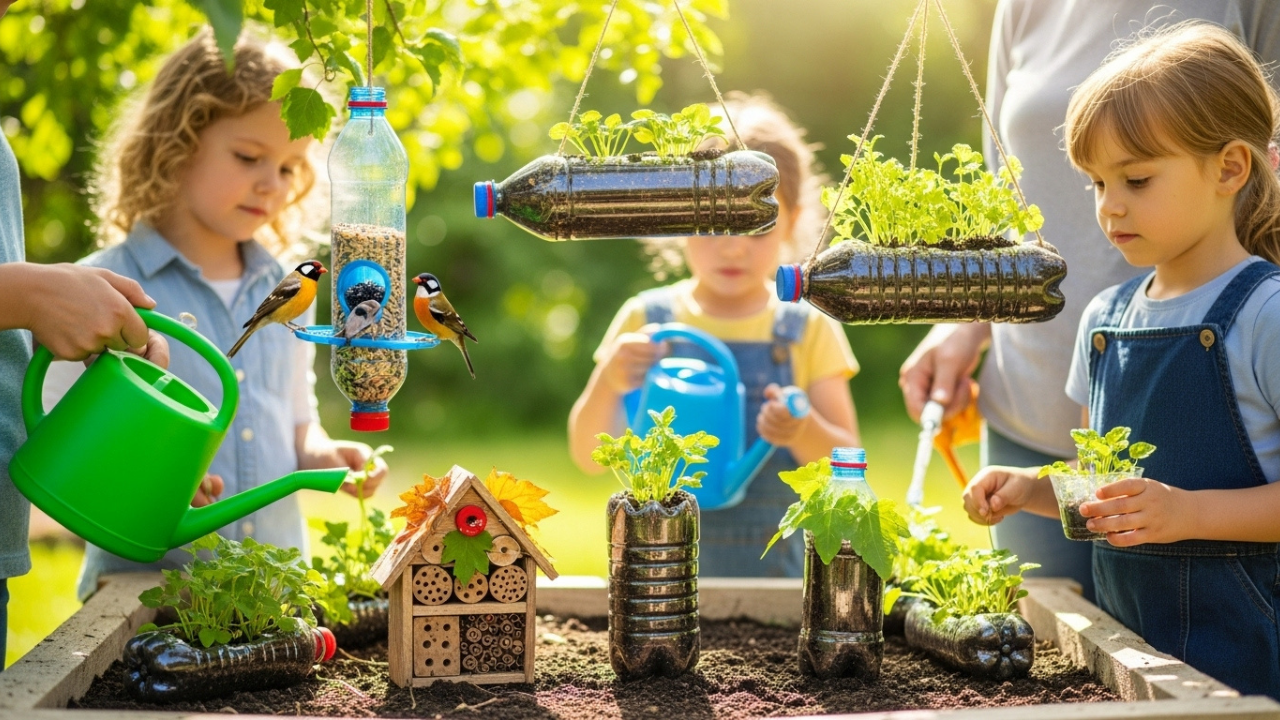
Plastic bottles are perfect for outdoor crafts too. Simply cut some holes in a bottle, add perches, and fill the bottle with birdseed to make a bird feeder. Put this on the garden or balcony to attract local birds and educate children about nature and wildlife.
Another project is a self-watering planter. All you have to do is cut a bottle from the center, invert the top half into the bottom half, and then add soil and seeds. The bottle will act like a mini greenhouse for the seeds, and the bottom half will store excess water. In this activity, kids learn about plant care and sustainability while making a handy gardening tool.
Bottles, twigs, and leaves can be used to create a small bug hotel. This activity helps kids connect with nature, encourages them to observe things around them, and learn more about the environment by doing so. Sustainable outdoor crafts are fun and innovative for young learners and adults alike.
Kids’ Fun Crafts from Plastic Bottles
Children can utilize plastic bottles to make imaginative toys and creations. You can cut and decorate bottles with paper, markers, and any other safe material to make simple bottle animals like bunnies, fish, or dinosaurs.
Another fun idea is toy cars or boats. Children can use bottle caps for wheels, sails, etc., and they will explore movement and balance as they create. These types of projects enhance problem-solving skills and spatial awareness.
The amazing part of these crafts we will work on today is that it is totally child-directed. Their design embodies their imagination and individuality, making it a learning experience which is also soothing.
Collaborative or Classroom Projects
Crafts using plastic bottles are great group projects for schools or community programs. One example of collaborative artwork is bottle cap mosaics. These colorful assemblages can incorporate the contributions by multiple students. Each participant decorates a cap, and together they create colorful designs or themed murals.
Another collaborative option is an eco-art installation. Make sculptures, mobiles, or displays using bottles of different shapes, sizes, and colors. By doing these activities, you improve teamwork, communication skills, and creative thinking. Moreover, they also enhance awareness about sustainability.
Students learn patience and cooperation through classroom projects. With everyone’s contribution, the final piece will be larger and will amaze everyone, even though it is made up of smaller pieces.
Step-by-Step Plastic Bottle Craft Projects
Structured assistance helps the creation process to be smoother and more fun, especially for beginners and young learners. Here are a few detailed projects:
1. Bottle Flower Vases
-
Materials: Clean plastic bottles, scissors, paint, decorative tape or old pieces of fabric.
-
To give it a particular shape, cut the top or bottom of a bottle. Decorate with paint, markers, or fabric. Use the finished vase to hold flowers or other decorations.
-
Kids gain coordination skills and creativity through engagement with this useful object.
2. Mini Greenhouse Planters
-
Materials: Bottles, soil, seeds, water.
-
Trim the container in half. By reversing the top part into the bottom part, a mini greenhouse is formed. Add soil and seeds. The bottle conserves moisture and protects seedlings.
-
By watching their plants grow, kids learn basic plant care, environmental responsibility, and observation skills.
3. DIY Bird Feeders
-
Materials: Bottles, string, small wooden dowels or sticks, birdseed.
-
First, cut openings in the bottle. Next, insert sticks as perches for the birds. Then, fill the bottle with birdseed. Finally, hang it outdoors.
-
Kids take a closer look at wildlife outdoors. Helping local birds gives children a greater sense of pride and purpose.
Keeping Children and Students Engaged
Even creative activities can lose their appeal if sessions are lengthy or materials difficult to manage. For young learners, short, focused craft periods of 20–40 minutes work best. Switch up tactile, visual, and collaborative activities to maintain energy and interest.
Friend, incorporating storytelling enhances engagement. Ask the children to create a character or story for their creation. A bottle fish might be swimming in an imaginary ocean, or a decorated planter is part of a magical garden story. This makes it more fun while also improving language skills and imagination.
Positive reinforcement matters. Celebrate effort over perfection. All those cuts, strokes of paint, and glue applications form a learning process. It helps students think differently and become more confident.
Safety Considerations for Plastic Bottle Crafts
Using plastic bottles and scissors is safe when proper precautions are taken. Young learners should be given child-safe scissors along with non-toxic paint or glue. Adults must supervise the cutting and assembly, especially with smaller or intricate pieces.
Keep the workspace organized and clean. Limit the number of people at a table for projects that use sharp tools or hot glue. Encourage students to handle the materials with care. Remind them that cleaning up the area is part of this activity.
Safety does not stifle creativity. Children can explore freely while being supported through guidance. It is just as fulfilling to watch kids create safely as it is to see the final craft.
Decorating and Displaying Plastic Bottle Crafts
Plastic bottles are perfect for indoor or outdoor crafts. Cut some holes in a bottle, add perches, and fill it with birdseed to make a bird feeder. Hang it in the garden or on a balcony to attract local birds while teaching children about wildlife.
A self-watering planter is another great project. Cut a bottle from the center, invert the top half into the bottom half, and add soil and seeds. The top acts as a mini greenhouse, and the bottom stores excess water. Kids learn plant care, sustainability, and patience while creating something practical.
Combine bottles, twigs, and leaves to make a small bug hotel. This helps children observe nature and explore the environment hands-on. Sustainable outdoor crafts are not only fun but also foster curiosity and eco-conscious habits.
Fun DIY Projects for Children
Children can use bottles to make imaginative toys and decorations. For example, bottle animals like bunnies, fish, or dinosaurs are simple to create using paper, markers, and safe embellishments.
Toy cars or boats are another option. Bottle caps can serve as wheels or sails, helping children understand movement and balance while exercising problem-solving skills. The best part? These projects are child-directed, letting imagination lead the way.
Collaborative Classroom and Group Projects
Plastic bottle crafts are ideal for group projects in classrooms or community programs. Bottle cap mosaics are a colorful example: each child decorates a cap, and the group assembles a larger mural.
Eco-art installations using bottles of different shapes, sizes, and colors can become sculptures or mobiles. These projects encourage teamwork, communication, creativity, and awareness of sustainability. Children learn patience, cooperation, and how individual efforts contribute to a collective masterpiece.
Step-by-Step Plastic Bottle Craft Projects
Structured guidance makes crafting easier and more enjoyable for young learners. Here are some detailed projects:
1. Bottle Flower Vases
-
Materials: Clean plastic bottles, scissors, paint, decorative tape or fabric.
-
Cut the top or bottom to shape the vase, then decorate. The final vase can hold flowers or other items.
-
This activity improves hand-eye coordination and creativity.
2. Mini Greenhouse Planters
-
Materials: Bottles, soil, seeds, water.
-
Invert the top half into the bottom half to form a mini greenhouse. Add soil and seeds.
-
Children learn plant care, observation, and responsibility.
3. DIY Bird Feeders
-
Materials: Bottles, string, small dowels, birdseed.
-
Cut openings, insert perches, fill with birdseed, and hang outdoors.
-
This project teaches about wildlife and gives children a sense of pride in helping nature.
Displaying and Celebrating Projects
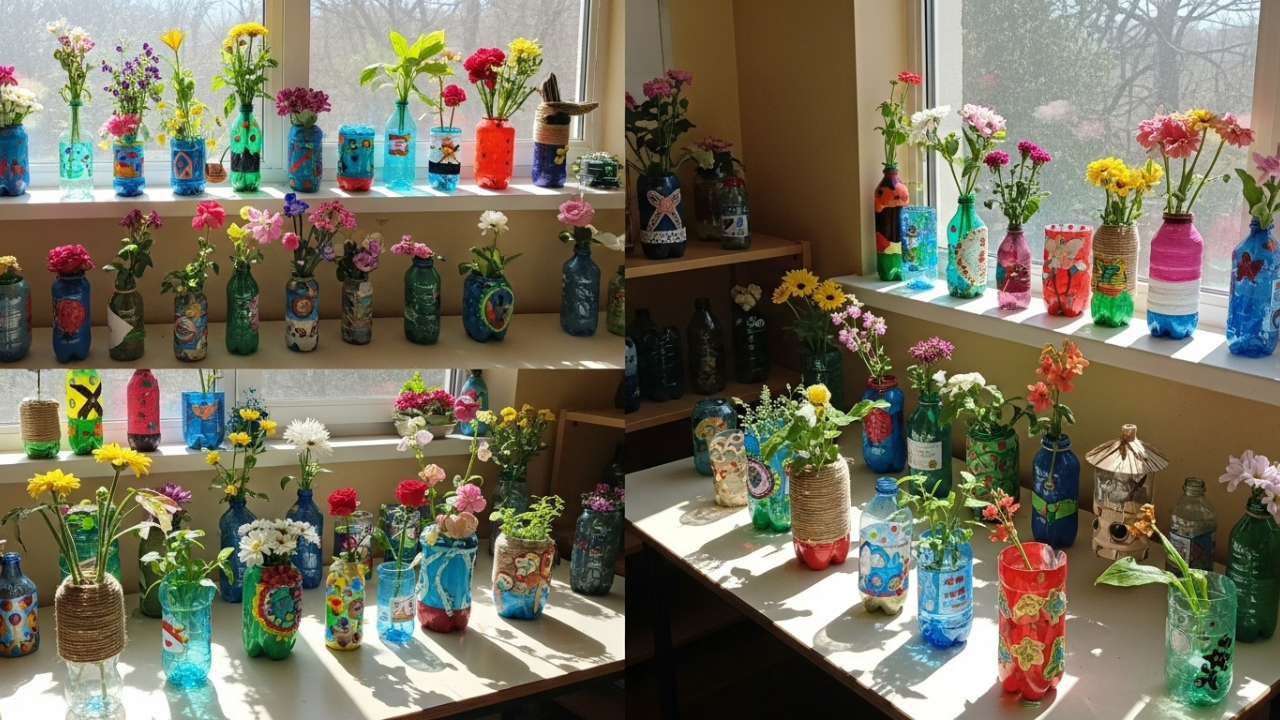
Friend, when children display their work, it reinforces pride and ownership. Planters, bird feeders, and vases can decorate the classroom, home, or garden. Rotating displays keeps spaces fresh and visually appealing.
Create sustainability-themed displays. An upcycled classroom garden with decorated bottles and DIY bird feeders teaches recycling while promoting cooperation. Photo projects are another great idea—photographing crafts preserves memories and helps children track skill growth over time.
Encouraging Problem-Solving and Creativity
Crafting naturally presents challenges. Bottles may not stand correctly, paint might not adhere, or parts may fall. These problems encourage critical thinking, perseverance, and adaptability.
For example, when a group struggled with tall planters, they devised a cardboard base and tape support. This process teaches practical problem-solving and teamwork, showing children that learning is just as important as the finished project.
Long-Term Educational and Environmental Benefits
Regular crafting with recycled bottles has lasting benefits. Children improve fine motor skills, hand-eye coordination, spatial awareness, creativity, and social skills like teamwork and communication.
Environmentally, these projects instill habits of recycling and sustainability. Creating something useful from waste fosters responsibility and care for the planet. Completing projects builds confidence, patience, and pride in tangible accomplishments.
Making Plastic Bottle Crafts a Regular Activity
Friend, regular crafting amplifies the benefits. Set aside dedicated times for bottle projects, rotate materials, and introduce seasonal or collaborative projects. Encourage older children to mentor younger ones, building leadership and community skills.
Progressive practice allows children to experiment with advanced techniques like painting, cutting, and multi-piece assembly. Over time, they develop higher-level crafting skills while reinforcing environmental consciousness.
My Opinion
Plastic bottle crafts transform ordinary waste into something meaningful and beautiful. Whether creating flower vases, mini greenhouses, bird feeders, or imaginative toys, these projects teach problem-solving, fine motor skills, creativity, teamwork, and sustainability.
Friend, with a little imagination and basic materials, even leftover bottles can be transformed into eco-friendly, practical, and fun creations. It’s rewarding to watch children create, learn, and take pride in making something valuable from everyday items. The impact extends to their skills, confidence, and awareness of the environment—a craft for life and for our planet.
How to package handmade gifts for shipping safely
How to package handmade gifts for shipping safely, Imagine spending hours crafting a delicate handmade gift. You wrap it up, ship it out, and wait
Best Craft Fairs to Sell Handmade Items in the US
Best Craft Fairs to Sell Handmade Items in the US, It would be striking to spend hours making handmade items, only to have no one

SEO Tips for Etsy Listings for Craft Sellers
SEO Tips for Etsy Listings for Craft Sellers, Picture the scene: spending hours creating gorgeous handmade items but not selling ANY on Etsy. Your products
Trending Handmade Products to Sell in 2025
Trending Handmade Products to Sell in 2025, If you spent hours making unique handmade items for sale in 2025, would you struggle to decide which
