
Zero Waste Crafting Ideas for Beginners, You are cleaning up your home and you have bags or piles of leftover paper, fabric scraps and empty jars. Most individuals would throw away these items without hesitation. However, what if you used these “leftovers” for your next project? The core of zero waste crafting is turning clutter into something useful, beautiful and good for the environment.
Zero waste crafting isn’t just a hobby. It’s a mindset, an easy but powerful way to cut down waste while expressing your creativity. For beginners, it might feel overwhelming at first. You may be wondering how these scraps or old boxes or jar lids can ever be useful. You can do it without fancy hammer and nails or expensive tools and materials. With a little bit of assistance, you could easily get a more organized home, better-looking environment and a clearer conscience by living sustainably.
As this guide ends, you will have the confidence to start your zero waste crafting journey and practical know-how. You will learn what materials to use and how to prepare them. More step by step ideas to turn simple scraps into treasure.
Understanding Zero Waste Crafting
What Is Zero Waste Crafting?
When it comes to crafting, zero waste simply means using what you have rather than buying something new. It is designed to reduce household waste by reusing materials that might otherwise be thrown away. Beginning it might sound like this is intimidating, but it need not be.
The beauty of zero waste crafting lies in its simplicity. Zero waste crafting is all about making things with what’s on hand, unlike traditional crafting that needs more specialized materials. The cereal box, buttons and scrap cloth that you deem useless can make your next project!
Mindset for Beginners
Approaching this as a beginner, the key is mindset. Start small. Don’t aim for perfection. Every project helps us learn something, and every small success boosts confidence. The idea is to create something useful and impactful whilst diverting waste and every little step counts.
Preparing Materials for Your First Projects
Collecting Reusable Materials
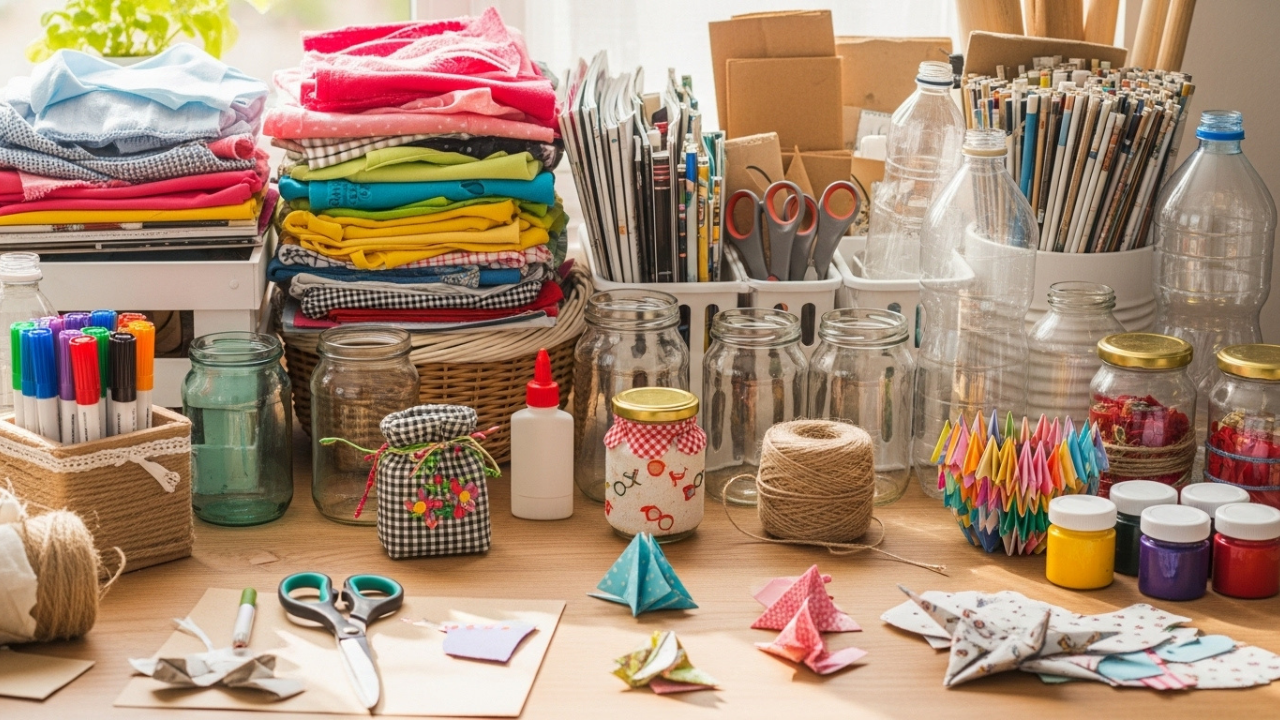
Prior to making something, you should assemble your materials and prepare them. This is where beginners get confused… but it’s more simple than you think. Start by moving through your home and noticing things that can be used again. Use fabric scraps, bits of cardboard, empty jars, old magazines, or bottle caps for your next project.
Cleaning and Organizing Materials
Be sure to clean them once you have collected materials to work with. Cleaning jars, peeling off stickers from containers and flattening cardboard for easy handling. If material is wrinkled or torn, you can trim the edges or patch it together to make it useful. Making sure your materials are clean and prepped means your projects will look better and last longer.
Organization plays a big role in reducing frustration. Store like items together in baskets, bins or drawers. When you can see all the materials you have, you can visualize your project ideas and see what can work. A small collection of scraps can offer endless creative possibilities.
Beginner seeds challenge by starting with what you already grow, easy. Don’t rush out or buy any sophisticated tools from craft shops. Crafting with no waste is using our resources or imagination to the fullest.
Essential Tools for Beginners
Basic Tools You’ll Need
You do not need a fully stocked craft room to start any zero waste project. In fact, the simpler it is, the more beginners will get to focus on creativity than complex techniques.
Scissors, glue, tape, ruler, marker or pen are basic tools. If you sew like a pro, then go ahead and add a needle and thread to fabric. You can use some optional tools — like craft knives or stencils — but you don’t need them.
Safety Tips
Safety is crucial, especially if children are involved. Ensure that the scissors are age-appropriate and handle the sharp equipment yourself. You can make beautiful and functional creations with minimal equipment. Imagination and patience are the true secrets not the costly tools.
Beginner-Friendly Zero Waste Craft Projects
Upcycling Jars and Tins
Empty jars or tins can easily become storage organizers. A small jar can hold buttons, sewing needles, or office supplies while larger tins can organize kitchen items or craft tools. You can decorate the boxes using leftover fabric or wrapping paper or paint them to match your home décor and make them appealing.
Fabric Scraps Into Functional Items
Fabric scraps also offer endless possibilities. You can recycle smaller pieces to make coasters, bookmarks, or little pouches to hold jewelry or stationery. Using sewing or glueing together parts creatively you can create useful and decorative items.
Paper and Magazine Crafts
Old magazine can become an item of decoration and so on. You can fold them into origami, make them into cards, or even layer them into wall art to give texture, color and personality. Even the old packaging we have lying around can be used as gift boxes or drawer dividers.
Plastic Bottles for Beginners
Everyday plastic bottles, which many consider waste, are great for beginners. You can cut and decorate them to make planters, organizers, or small hanging storage. These makeovers save items from the landfill. Problem-solving is a valuable skill you’ll gain, and the first task is figuring out how to reshape and reinforce the bottle for use.
Starting Small and Simple
The key for beginners is to focus on one project at a time. Pick a material you feel comfortable with and experiment. Even simple things can make you confident and inspire you for bigger projects later.
Decorating and Personalizing Your Crafts
Adding Creativity to Your Projects
After preparing your base materials, it’s time to add some personality. Decorating your creations is what transforms it into something that makes your creations feel unique and special.
Fabric remnants, leftover ribbons or paint can be used to make it nicer. For a more rustic look, add twine or jute accents. You can use buttons, beads or cutouts from magazines. Zero waste crafting is wonderfully free from rules, as long as it expresses your own style and serves a purpose of your choice.
Embracing Imperfections
People who are just starting out in any pursuit often worry they might ‘mess everything up’. However, a little imperfection can add charm and individuality to your creation. A small raw edge or an off-colour piece of fabric won’t spoil the project; it has a story. It shows the item was made by hand with care which makes it more special.
If children get involved, decorating also has an educative angle. They learn about colors, designs, and the importance of using things creatively. It’s a hands-on lesson in both art and sustainability.
Common Challenges for Beginners
Materials and Glue Issues
It’s normal to encounter a few hiccups along the way. It’s possible that the material rips, the glue won’t stick, or the shape won’t be just right. These small challenges are part of the learning process.
Fixing things is often quite simple – adding some cardboard or fabric if a weak point is exposed; using a stronger adhesive if an item is heavy; or combining materials to maximize stability. Being patient is very important. Take your time, and know that mistakes often lead to creativity.
Overcoming Overwhelm
Another common issue is choosing what to make first. Beginners can feel overwhelmed by the options. Going for a small, yet impactful project can be helpful. For instance, organizing a bunch of pens you have lying around or some small toys at home. Once you see success in your project, you feel more confident in creating a second one.
Benefits Beyond Creativity
Zero waste crafting isn’t just about making pretty things. The benefits go far beyond the physical items you create. Engaging in crafts has a calming effect on the mind. Transforming junk into useable items provides a deep satisfaction that benefits our mental well-being.
Also, these crafts can benefit the environment. Every project helps cut down on household waste, extends the life of materials, and lives sustainably. It’s a simple way for beginners to make a difference without dramatic lifestyle changes.
Finally, zero waste crafts can be cost-effective. Reusing materials that you already possess helps you save money and obtain functional items that would otherwise cost a fortune. Entering into crafting is both gratifying and functional for beginners.
Advanced Ideas for When You’re Ready
Combining Materials for More Complex Projects
After you get the hang of basic projects, you can combine materials for more involved projects. You can use cardboard, fabric scraps and paper to make organizers and décor items or small furniture pieces. For instance, a strong cardboard box draped in fabric can convert to a drawer compartment. Using a mix of materials makes your creation not only stronger but also gives it a unique texture and character that you cannot buy.
Personalized Home Décor
By controlling waste and recycling unwanted items into useful products, you personalize your home through zero waste crafting. One way to recycle household items is to create picture frames from old magazines, wall art from a cardboard and paint, and fabric scrap garlands for seasonal celebrations. Each piece showcases your creativity and personal style, reinforcing the belief that we can create functional and beautiful crafts sustainably.
Sharing and Inspiring Others
Crafting with Family and Friends
Zero waste projects can make great social and family activities. have fun, let your kids or buddies or away make crafts with you. A Saturday or Sunday afternoon can quickly spin into a creative workshop where everyone learns to reuse materials and solve problems together.
Working alongside others also brings fresh ideas. You might kick things off with a basic jar, and then brainstorm upcycling old furniture or leftover fabric. Benefits of Sharing Your Experience Teach Others The Joy of Crafting Sustainability
Inspiring Your Community
After you finish a few projects, you can start posting your projects online or in community groups. Sharing photos, tutorials, or even tips can get friends and neighbors interested in trying zero waste crafting. Small actions can inspire others to reduce garbage and become creative in different ways.
Sharing also provides motivation for yourself. Whether it’s a compliment or a simple ‘thank you’, it feels good to know that I am making a difference in other people’s lives!
Maintaining and Caring for Your Crafts
Protecting Your Handmade Creations
Keeping handmade crafts in good condition helps them to last longer. Keep cardboard-based and paper-based items dry and store soft fabric in a dry, ventilated place. For extra durability, apply a light coat of sealant or varnish to surfaces that will get spills or be handled a lot.
Cleaning Tips for Longevity
Dust can accumulate on your creations over time. Use a gentle cloth or lint roller to clean fabric boxes. Paper-based items can be lightly brushed with a dry brush. With even a little upkeep, your crafts will stay fresh.
Refreshing and Repurposing
Zero waste crafting is a continuous cycle. A tired project can often be refreshed with new layers, paint, wrapping or otherwise. The container that kept button yesterday will become pen holder tomorrow. By using what you have already got earlier, you will not just save things, but it will also help you create new things by using the old ones in new ways.
Storytelling Through Crafting
Making Memories With Crafts
The emotional aspect of zero waste crafting is often overlooked. The magnificent little things made by upcycling junk tell their own stories like when it was made on a rainy day or while teaching a kid about sustainability. As time goes on, these creations become more than just useful items; they become a memory of the time spent being creative.
Crafts as Gifts and Personal Tokens
Handmade items make meaningful gifts. A piece of fabric scraps pouch, a jar organizer or a small piece of wall art could be a great thought. These items are often more cherished by the recipients than the mass-produced gifts since they are unique and show thought.
By storytelling and gifting, zero waste crafting is all about creating relationships and spreading joy, besides reducing waste like common perception.
The Environmental Impact of Zero Waste Crafting
Reducing Household Waste
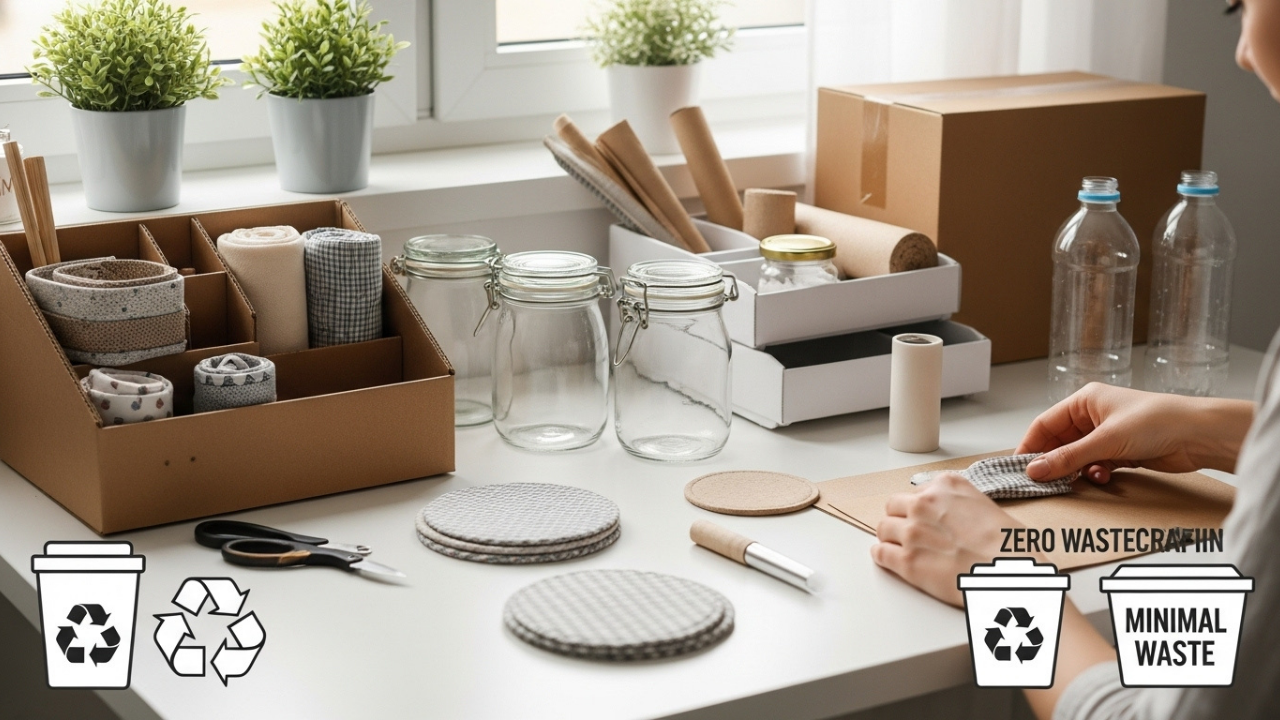
Every project decreases the amount of waste that goes to the landfill. Reusing one cardboard box to make an organizer is good as it won’t get thrown away. In fact, combining more than one project improves the outcome even further. Small things add up over time for a sustainable lifestyle.
Saving Resources
By using them on things you already have at home, you are saving water, energy, and raw material that would have gone into creating new items. Zero waste crafting shows that creativity and sustainability can work together beautifully. And it is easy for beginners to have a positive impact.
Real-Life Examples of Zero Waste Crafts
Upcycling Household Items
I know one beginner who turned a stack of glass jars into a fully functional craft area. To decorate my jars with leftover fabric, I used the fabric to suit my workspace. Each jar had buttons. Each jar had threads. Each jar had a small tool. What was once random clutter became a functional and beautiful display.
Another idea is to use an old magazine and cardboard to create wall art. Using layers of texture and a little paint, a simple corner of the room can become a stunning gallery. Various projects, like making coasters from scraps, can add a splash of color to a house whilst warding off waste.
Learning Through Practice
Stories like these demonstrate that anyone can try zero waste crafting. No experience is necessary — just patience and a willingness to try. Each mistake teaches you something while every success pushes you to continue the work.
Bringing It All Together
Beginners making zero waste crafts are doing a lot more than making. This is about developing your ability to see potential where others see waste, as well as making something practical, beautiful, and useful out of discarded materials.
The evolution starts with preparing and learning to use basic techniques. Getting on to some advanced projects and customizing your work teaches you patience, creativity, and mindfulness. This is an opportunity to engage friends and family to share in your creations and inspire others to live sustainably.
Even small projects contribute to a bigger picture. A jar organizer, fabric scrap pouch, or magazine wall art is simple but will not only cut down on clutter and save money but also connect you closer to home. Every creation is a small victory that reveals our resourcefulness, skill, and care.
Making things without waste is a lifestyle. It is not only enjoyable but also gives purpose and creativity to our life.
Conclusion: Begin Your Zero Waste Craft Projects Today!
You can craft without store-bought tools — think outside the box. With just patience and a little imagination, the world is your oyster. Start off with basic, doable projects first. Then, when you become confident enough, try jumping into advanced ideas.
Remember, crafting is not about perfection. Every project has its story and every creation contributes to a more sustainable and less frivolous life. So, gather your scraps, experiment, and create. Your house, creativity, and the environment will thank you.
How to package handmade gifts for shipping safely
How to package handmade gifts for shipping safely, Imagine spending hours crafting a delicate handmade gift. You wrap it up, ship it out, and wait
Best Craft Fairs to Sell Handmade Items in the US
Best Craft Fairs to Sell Handmade Items in the US, It would be striking to spend hours making handmade items, only to have no one
SEO Tips for Etsy Listings for Craft Sellers
SEO Tips for Etsy Listings for Craft Sellers, Picture the scene: spending hours creating gorgeous handmade items but not selling ANY on Etsy. Your products
Trending Handmade Products to Sell in 2025
Trending Handmade Products to Sell in 2025, If you spent hours making unique handmade items for sale in 2025, would you struggle to decide which
