
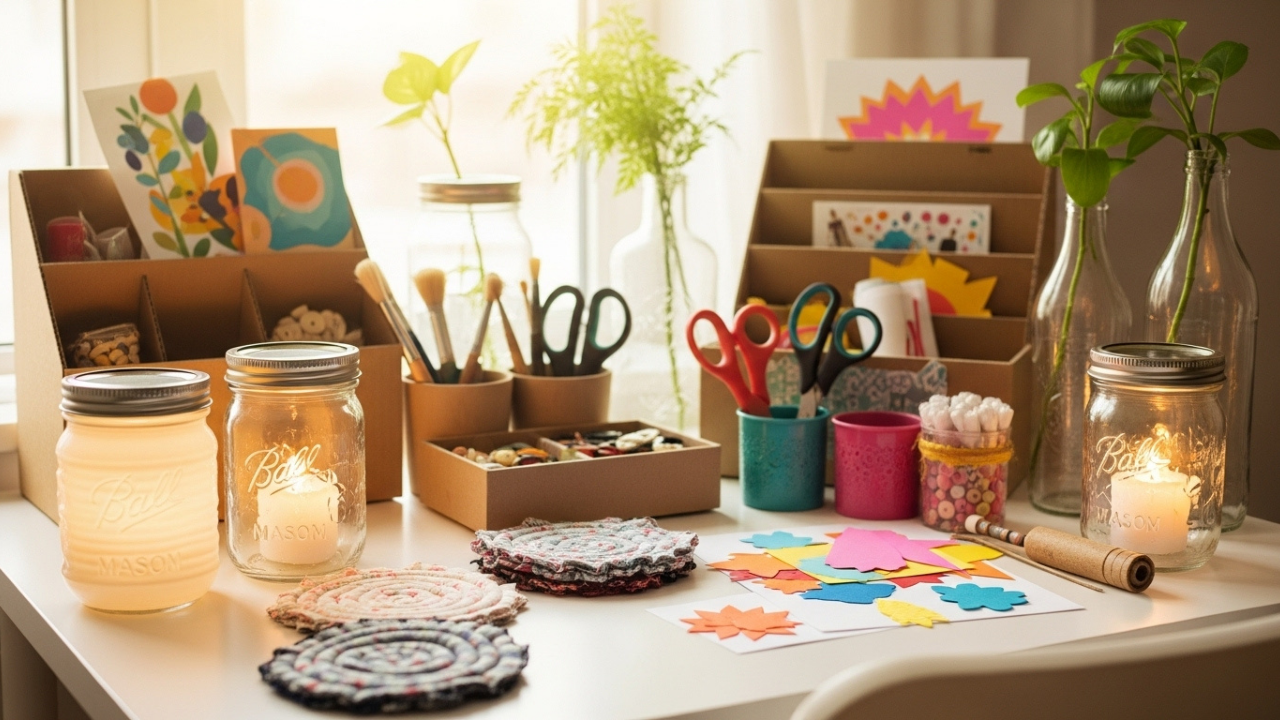
Easy DIY Crafts for Beginners Using Household Items, Making the ordinary beautiful, is it magic or creativity? I still remember turning old glass jars and bits of paper into glowing lanterns for my bedroom shelf for the first time. Though it was not perfect, there was surprising how note, it really did change my mood and space. That’s the real joy of DIY crafting. You don’t need fancy tools or expensive supplies. All it takes is a little curiosity, a creative mindset, and the ability to look at household items as unrecognised hidden gems.
If you’re a curious beginner, stay-at-home crafter, or someone who believes they can’t make lovely things like that, then this guide is for you. You can. And today, I’ll show you how.
Key Takeaways
-
Projects that use arts and crafts materials are fun and inexpensive. In addition, they are very rewarding, especially for beginners.
-
You can design beautiful things from household items.
-
Having a neat and tidy craft area makes it easier for you to be creative.
-
Working on easy projects helps you to learn and build confidence.
-
Every mistake is an opportunity to adapt and make the craft your own.
Why DIY Crafts Matter for Beginners
When I first began crafting, I didn’t know where to start. I have looked at online DIY videos for professionals and thought I require expensive paints, designer glue, and tools I’ve never heard of. But that’s not how creativity works. Crafting can be very meaningful especially when done with what you have around you.
If you think about it, the old magazines, glass jars, worn clothes, cardboard boxes, tin cans, etc. can easily be recycled into something pretty, useful, nice, and beautiful. Making things helps you to understand that creativity is not perfection but transformation. It is about taking something that has been overlooked and giving it a new purpose.
As you would be starting off, you might be amazed at how effortlessly your hands will start creating when you free them. That empty bottle becomes a vase, that torn T-shirt turns into a coaster, and suddenly, your home feels more you.
Rediscovering Creativity in Simple Things
I like to think creativity lives on underneath our busyness, waiting for the opportunity to shine. When you sit down with scissors, glue, and a few bits and pieces, something happens. You slow down. You begin to notice textures and shapes differently.
Crafting gives your mind space to breathe. It reconnects you to the simple joy of making. When you take your time to fold a piece of paper into a flower or colour an old jar, it grounds you as you focus entirely. It’s your time to create without pressure or judgment.
Affordable and Sustainable Crafting
Decorating or purchasing arts and crafts can be quite expensive. DIY crafts are your secret to achieving beauty on a budget. There’s no reason to spend a lot of money on home décor when you can reuse something in your drawers or recycling.
Every time you transform an old can into a lovely candle holder or reuse cardboard for storage, you reduce waste and save money. When you recycle, you’re also reducing the pollution created when making new materials. The creativity with purpose and personality is sustainability.
When you look at your completed craft and think, “I made this, and it cost me nothing except time and love,” you feel so satisfied.
Setting Up Your DIY Corner at Home
Creating Your DIY Craft Space
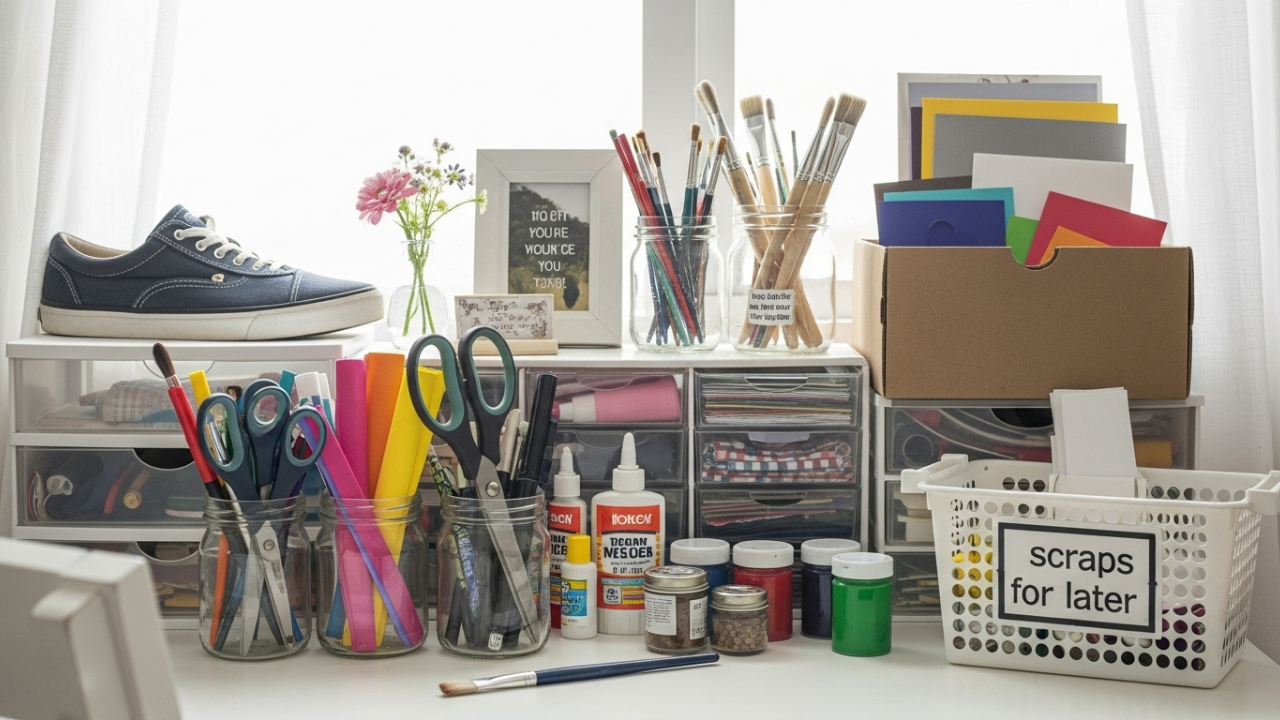
You don’t need a big studio to be creative. You can create a workspace for crafts at a corner near a window, a small desk, or a dining table. It is not about the size of the space but the feeling you get from sitting there – welcoming, orderly, and inspiring.
When I first started crafting, I was only given a shoebox filled with scissors, paper, glue attack, and empty jars. But that small space became my comfort zone. I felt calm and excited every time that I opened it up.
Creating a Simple, Comfortable Space
Choose a place in your home that is free of distractions. It can be a little desk in close proximity to natural light or a quiet corner by the window. Keep a few basic supplies handy; paper, fabric scraps, paint, scissors, and glue. Use tiny containers or recycled jars for holding buttons, threads, or brushes.
When your supplies are accessible, you will find that you are likely to craft on the spot. The idea is to make creativity accessible, not complicated.
Feel free to add a small picture, a quote, or a flower vase to personalize it and make it feel like your own.
Safety and Clean-Up Tips for Beginners
Crafting is fun, but safety matters too. Use scissors carefully, especially if kids are around. When using glue guns or sharp tools, always take care of your fingers and surfaces. Your workspace will get messier if you don’t put something under it, like an old towel or newspaper.
Most beginners forget to clean up, including you; that is part of the process of creativeness. After completing your work, you should organize your space for the new project with a fresh mind. Keep a small basket or box labelled “scraps for later” so you can use leftover bits for later projects.
Everyday Household Items You Can Transform
There are many creative tools already at your home that may surprise you. Before buying anything, take a quick look around your kitchen, bedroom, or storage boxes. Most probably, you will find at least half of your crafting supplies there.
One time I decided to take on the challenge to make five DIYs with only things at home. I was surprised to see things being recycled to make drawer organizers, lanterns, and flowers out of old shirts. It reminded me that creativity thrives in limitation.
Common Materials to Keep
If you’re just getting started, there are many common household materials worth saving. You will possibly find paper in magazines, cardboard, wrapping paper, and even junk mail. Used jars can be cleaned and repurposed to make new beautiful things. Plastic bottles, tin cans, and old clothes are actually treasures.
When I see an empty cereal box, I no longer throw it away. I imagine it as a sturdy organizer or a photo frame base. Everything has potential; it’s just about the way you look.
Keep a small “craft basket” somewhere visible. Whenever you see something interesting, just throw it in. That basket becomes your creative fuel.
Understanding the Basics of Reuse
The essence of DIY lies in the ability to reuse—as in taking the mundane and creating something special. “Could this be used for something else before I throw it away?”
An old mug can become a pen holder. A cardboard roll can turn into a decorative wall piece. A page of newspaper can also be made into a basket or a garland. Once, I turned an old lamp base into a rustic-looking jewelry stand, and now it is sitting on my dresser.
Every project begins with imagination. When you start noticing worth in useless things, you will never be able to view any household item similarly.
Step-by-Step Easy DIY Projects for Beginners
Now, let’s bring your creativity to life. Here are two beginner-friendly projects that are simple to make. You only need things that are lying around your house and a little patience.
Project 1: Mason Jar Lanterns
I made my first mason jar lantern on a rainy afternoon. I had just emptied a jar of jam when I thought, “Why not use this thing?” It was my curiosity that made one of my most fav DIY pieces.
Start by washing the jar and scraping the label off. After finishing dry, you can use old lace, paint, or paper cutouts to decorate the outside surface. I use tissue paper to make a stained glass effect with a lovely glow from the inside.
After decorating, place a tealight or small candle inside. When you light it, the soft glow reflects your creativity. This project is easy to make, sustainably minded, and beautiful: making it ideal for winter evenings in or for gifting.
Project 2: Fabric Scrap Coasters
If you have any old jeans or shirts that are too worn to wear, you could donate them. I had some worn-out fabric pieces that I couldn’t throw away, so I decided to make coasters out of them.
In a square or a circle the size of your palm, cut the fabric. You can layer two or three pieces for thickness. If you can’t sew, you can use fabric glue to keep the layers in place. To give it a rustic appearance, I generally like to stitch small patches around the edges with color threads.
These coasters are adorable to look at and come from something the designer or creator wore. So yes, they tell a story. Each time I put down my cup, it reminds me that creativity can make even nostalgia useful.
From Everyday Trash to Timeless Treasure
One time I went to a friend’s house and noticed a wall covered with art framed in cardboard and wrapping paper. She told me she hadn’t spent a single dollar. On that day, I understood that the secret to great DIY makers is seeing the chance, not the trash.
Look around your home again. The cereal box in your kitchen could become a photo frame. The plastic bottle sitting by your sink could grow into a cute herb planter. An empty cardboard from a delivery box could become a jewelry organizer. Creating something makes you see your world differently as you work.
That shift in vision is where real creativity begins.
Project 3: Cardboard Drawer Organizer
Cardboard is surprisingly strong and robust, yet flexible and cuttable. It is also something nearly every household has around. When I made my first cardboard drawer organizer, I was amazed by how professionally it turned out in the end.
Start by measuring your drawer’s length and width. Next, cut strips of cardboard that fit snugly across it, to use as dividers. Use tape or glue to secure the intersections. You can cover the cardboard using leftover wrapping paper, magazine pages, or even old wallpaper to give it a clean look.
This project teaches the lesson of how to balance function and beauty, which is an important craft lesson as well. Every piece doesn’t have to be extravagant—it just has to improve your day-to-day life in some manner. And that’s where the magic lies.
Indoor Planter Bottle for Any Corner
When I began keeping indoor plants, I saw how pricey pots are. That’s when plastic bottles became my new favorites. I see a planter waiting to bloom after I finish a bottle.
Cut a plastic bottle in half. The bottom part becomes the pot. Use acrylic colors to paint it or cover it with paper to make it matte. Make a few holes at the bottom for drainage, add soil, and place your favorite small plant.
You can cut the bottle in half to get the upper half of the bottle to use as a hanging planter. Simply add a string around the edges of the planter to hang it with the help of a wall hook or window. Having made dozens of such items in different colors and patterns, they have become great conversation pieces when guests visit.
Using these planters not only gives an organic touch to your home but also lets you recycle plastic responsibly.
Adding Personal Touches to Your Crafts
A true DIY piece always carries a story. Be it a jar’s pattern or a coaster’s stitch, your touch makes it different from anything you would have bought in a store. When we personalize something we create, we infuse it with meaning, which gives the item personality.
Keep the recipient’s personal tastes in mind when giving a handmade gift. Maybe they adore warm colors, flowers, or rustic patterns. When gifting, I like to add a little note or tag on each component that states where I bought them from. For instance, saying, “This frame is from the cereal box you brought for our picnic,” always brings a smile to their faces.
Your crafts can tell a story—a recycled piece at a time.
Emotional Benefits of DIY Crafting
Crafting for Relaxation and Mindfulness
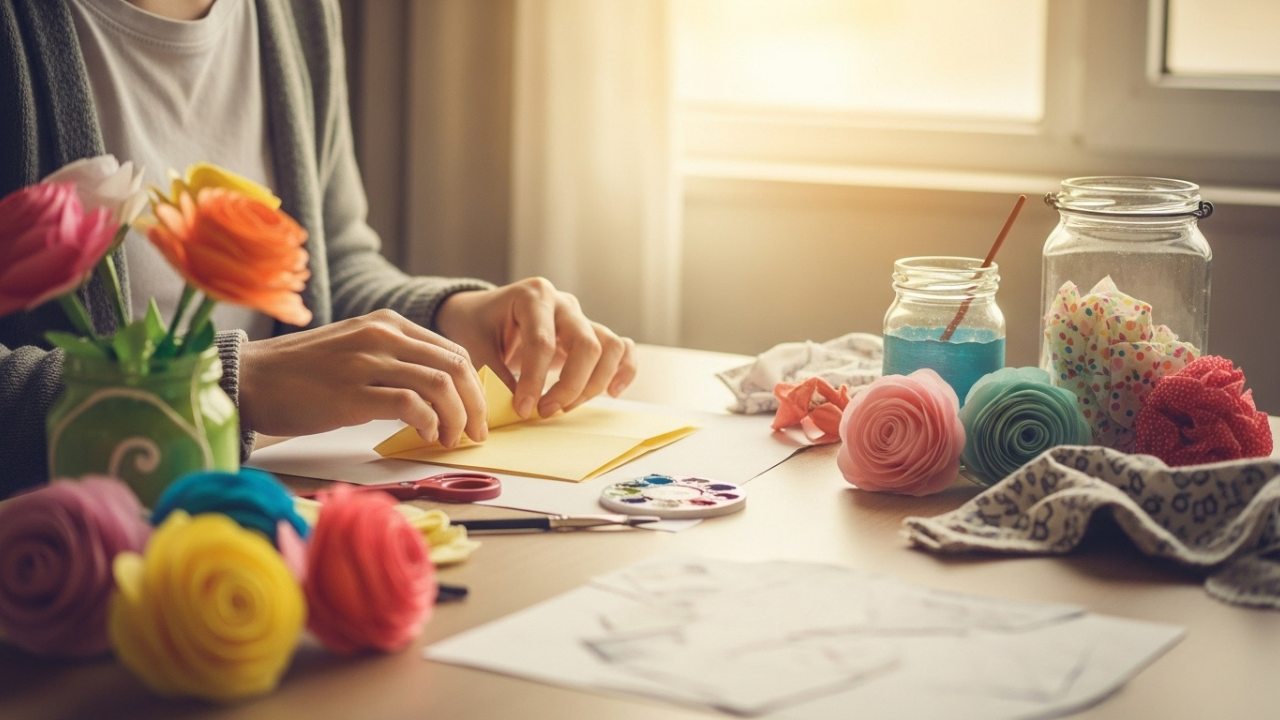
I never thought that when I started crafting it would be a way to relax. After a tiring day at work, it always refreshes me to sit down with some paper, glue, and colors. Concentrating on small details during moments of silence helped relieve my stress momentarily.
Psychologists say doing something repetitive like folding, cutting, or painting can have calming effects. Doing these activities causes your brain to be wired differently as they take your mind off things and fix your attention to the moment. When your hands are busy, your mind rests.
Crafting also builds confidence. Every single finished project gives you evidence, no matter how simple, that you can build something from nothing. And with each new idea, your creativity grows stronger.
How to Keep Crafting Without Feeling Overwhelmed
After a few attempts, a lot of beginners start strong but stop, usually because they get stuck or run out of ideas. There’s an easy solution if this sounds like you.
First, don’t aim for perfection. Enjoying the process of creating is easier when you stop comparing your works to others. Creativity should feel like play, not pressure.
Second, set realistic goals. Perhaps you could try and commit to one project a week. Something small. Perhaps a decorated candle holder. Or even a painted jar. When you enjoy those little wins, it becomes easier to stay consistent.
And most importantly, share your creations. You can post them on social media, give them as gifts to friends, or use them to decorate your workspace. When people see our work and respond, we feel motivated.
Remember, the goal isn’t to impress—it’s to express.
Project 5: Paper Wall Art for Beginners
One of my favorite ideas for do-it-yourself wall art started with old magazines and scissors. I cut colored strips and rolled them to make small circles. Then I placed them on a cardboard in a flower form. It required a little patience, but when it finally got hung on the wall, it became a little bit of happiness that I made.
Tear the pages from the old magazines or books to try it yourself. Cut them into shapes—circles, petals, or triangles. Glue the pieces into a pattern on cardboard or canvas. You can frame it later or simply tape it on your wall.
This project demonstrates one of the most delightful aspects of DIY: the concept that art doesn’t have to be painted. It can be built from everyday paper and imagination.
Building Your Crafting Confidence
I’ll be honest—my first few projects were far from perfect. My lanterns were uneven, my coasters crooked, and sometimes all stuck together with glue. But with each attempt, I improved a little. That’s what creativity is about—progress, not perfection.
Every craft teaches you patience, design, and problem-solving. Even the failures often lead to better ideas the next time. Earlier, when I was working on a paper basket, it collapsed halfway through. I used the same strips for collage work that still hangs on my wall.
Don’t throw away your experiments—reimagine them.
Turning DIY Crafts Into Meaningful Gifts
A handmade gift carries warmth that a store-bought gift can’t. They show time, thought, and effort. My friend told me that the candle set I made her for her birthday was her best gift ever because though it didn’t look perfect, it felt like something I made for her.
You can start small. You can gift fabric coasters, paper flowers, or decorative jars. Make a short note explaining what you made this for, or what influenced the design. They like handmade gifts because they have emotion behind them.
And who knows? Your crafts could one day become a business with practice. Many crafters today sell their creations online. The joy of giving something you made cannot be valued even if this does not happen.
Sustainable Crafting: Creating with Care
Today, we produce waste faster than we can recycle it. This is why choosing to craft with things around your house matters more than you think. When you reuse a bottle, a box, or paper, you reduce your footprint a little.
Making things in a sustainable manner develops a sense of awareness. You start valuing what you already have. You see potential in things that once looked useless. When you do this, you will start living more creatively and responsibly.
These days, when I look around my home, I find that most of my favourite things are handmade. These include planters, wall hangings, and even lamps. Being creative doesn’t cost the earth – it saves the earth.
Making Life Beautiful: Creative and Inspiring
In conclusion, I want you to remember that every creator was once a beginner. You don’t need to be “artistic” to craft. You just need the courage to start. The more you create, the more confident you’ll become.
You will start showing off your creativity around the house—a repurposed vase, a handmade picture frame, etc. In no time at all, there won’t be a space that isn’t a reflection of your personality.
Pick a quiet place, get your craft supplies, and start crafting! It might just become your favorite part of the day.
How to package handmade gifts for shipping safely
How to package handmade gifts for shipping safely, Imagine spending hours crafting a delicate handmade gift. You wrap it up, ship it out, and wait
Best Craft Fairs to Sell Handmade Items in the US
Best Craft Fairs to Sell Handmade Items in the US, It would be striking to spend hours making handmade items, only to have no one
SEO Tips for Etsy Listings for Craft Sellers
SEO Tips for Etsy Listings for Craft Sellers, Picture the scene: spending hours creating gorgeous handmade items but not selling ANY on Etsy. Your products
Trending Handmade Products to Sell in 2025
Trending Handmade Products to Sell in 2025, If you spent hours making unique handmade items for sale in 2025, would you struggle to decide which
